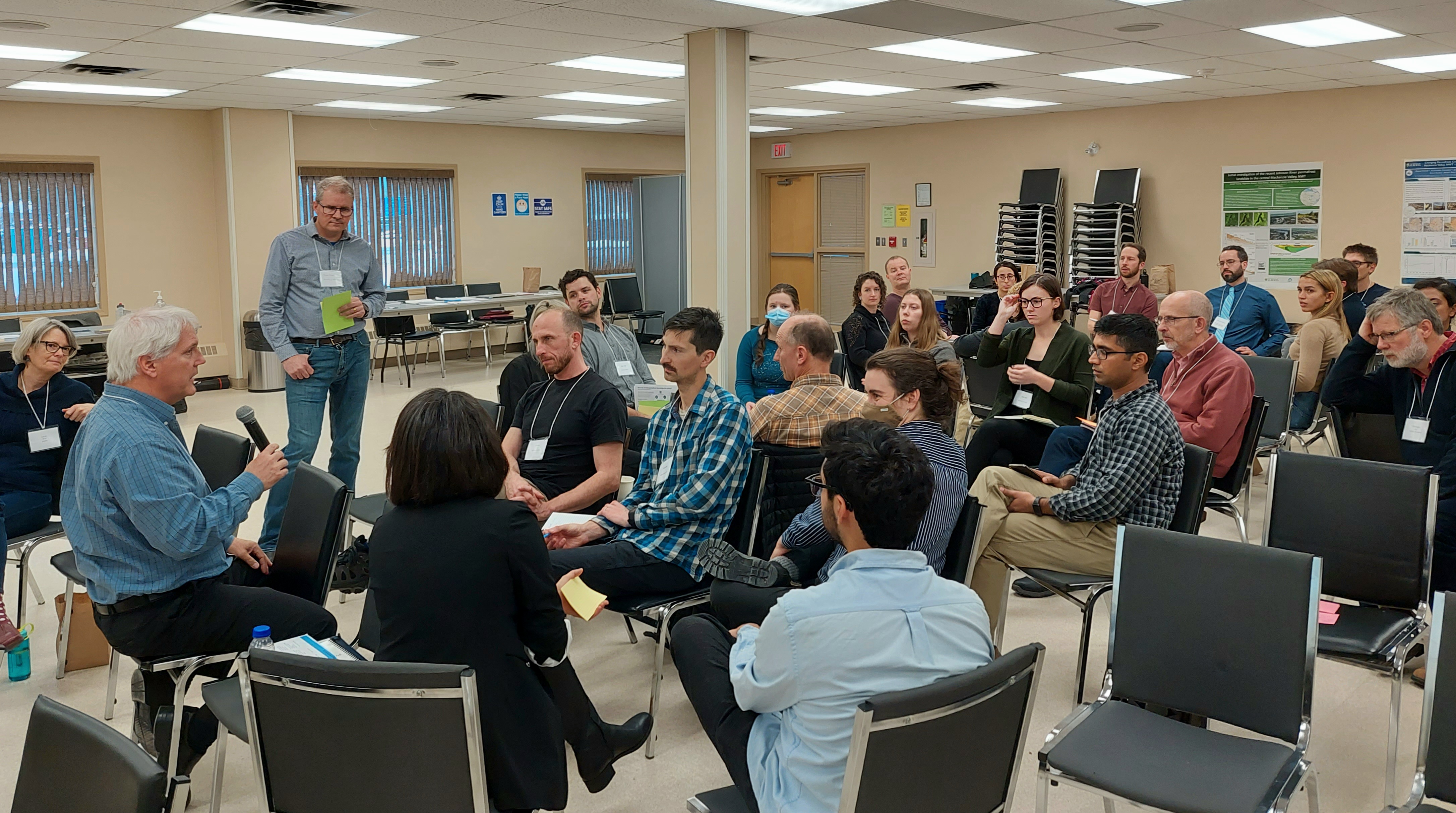
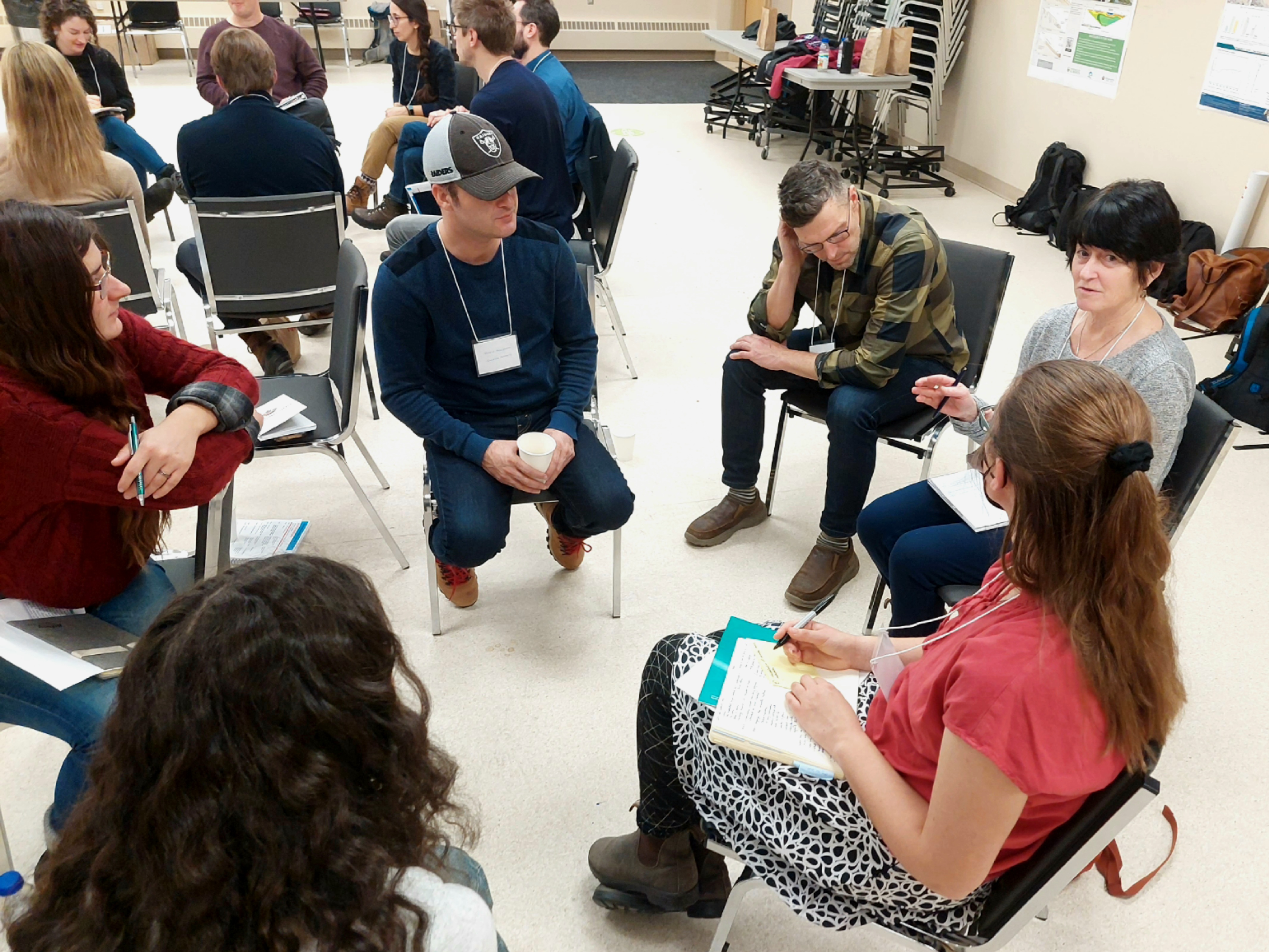
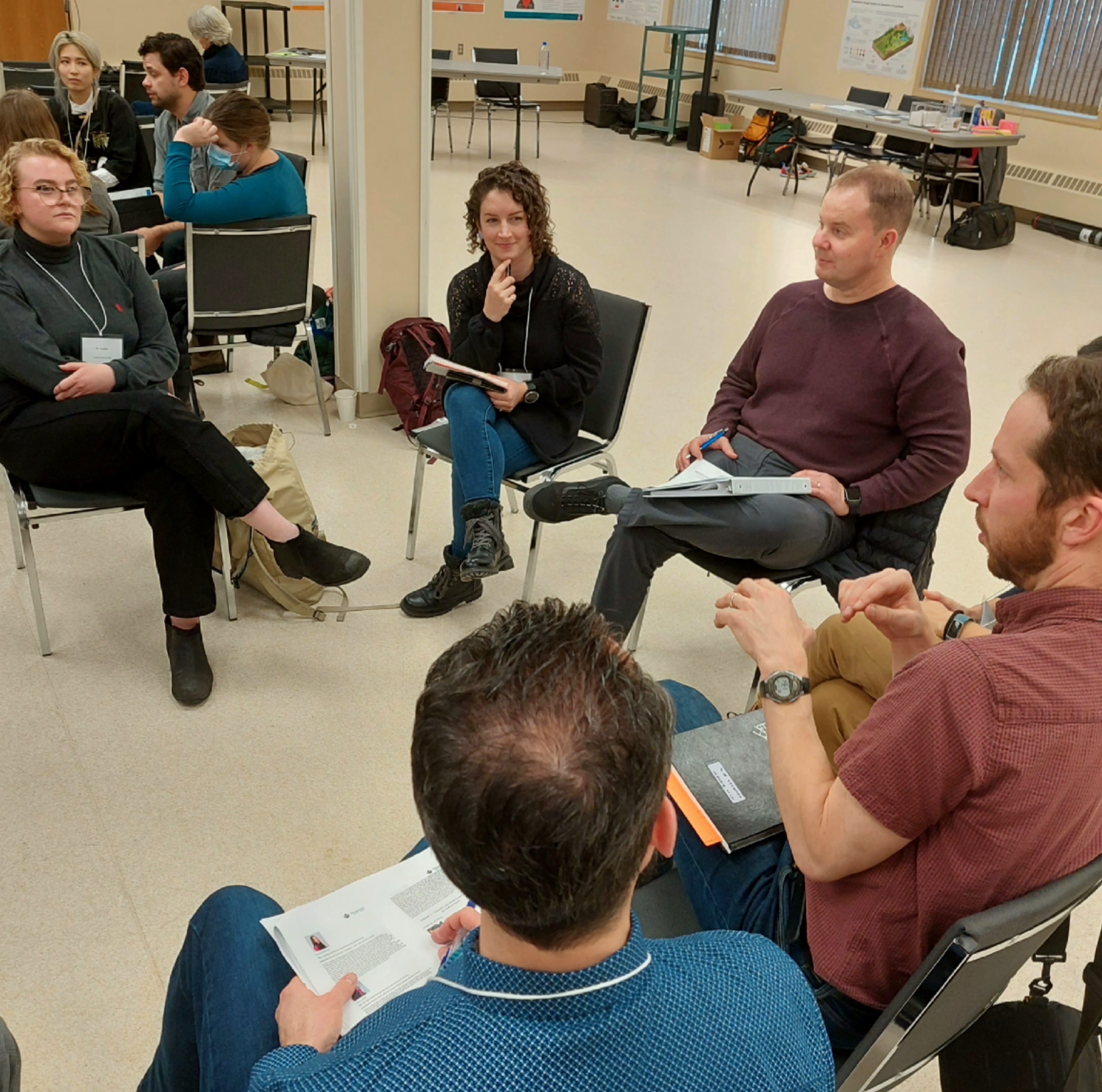
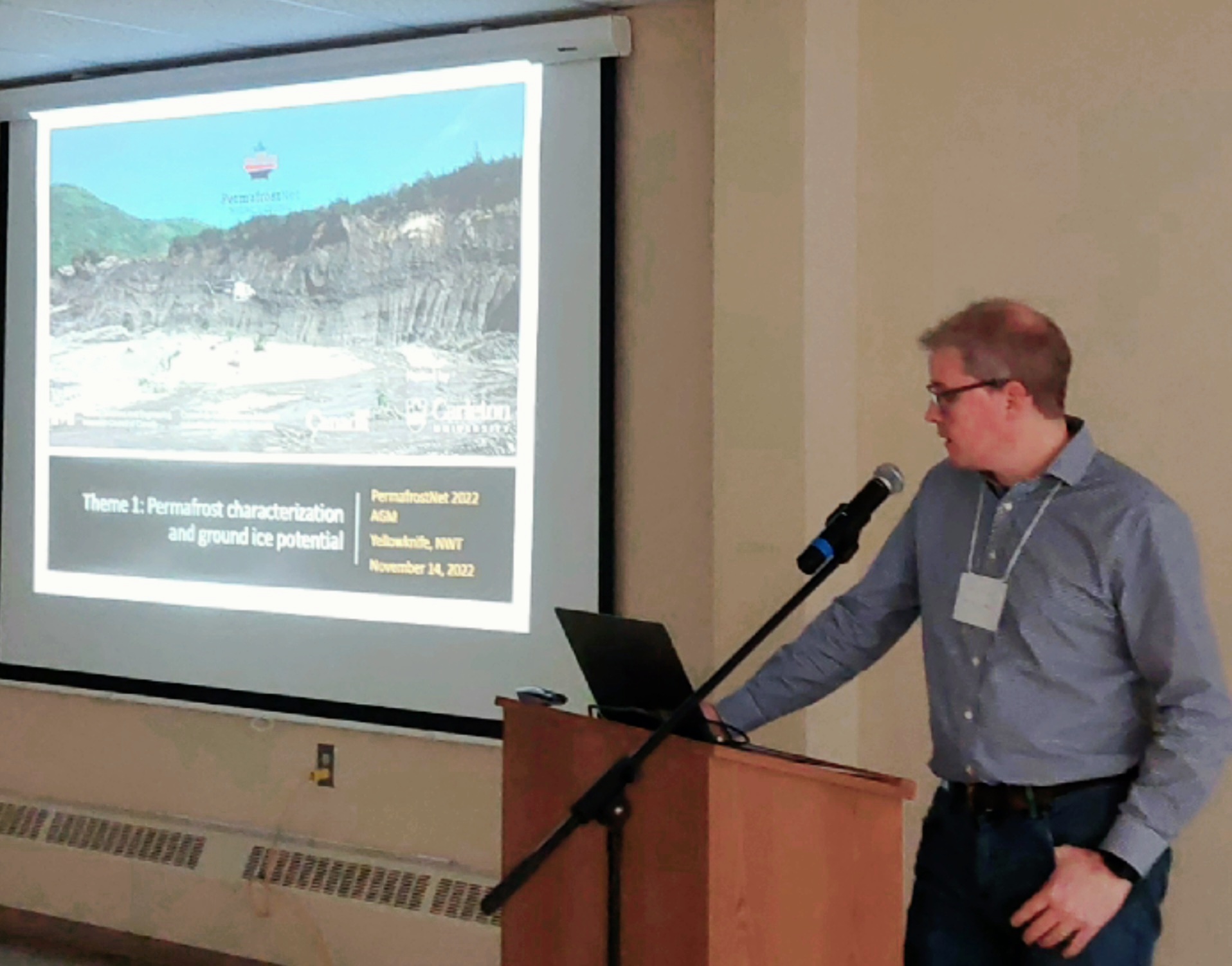
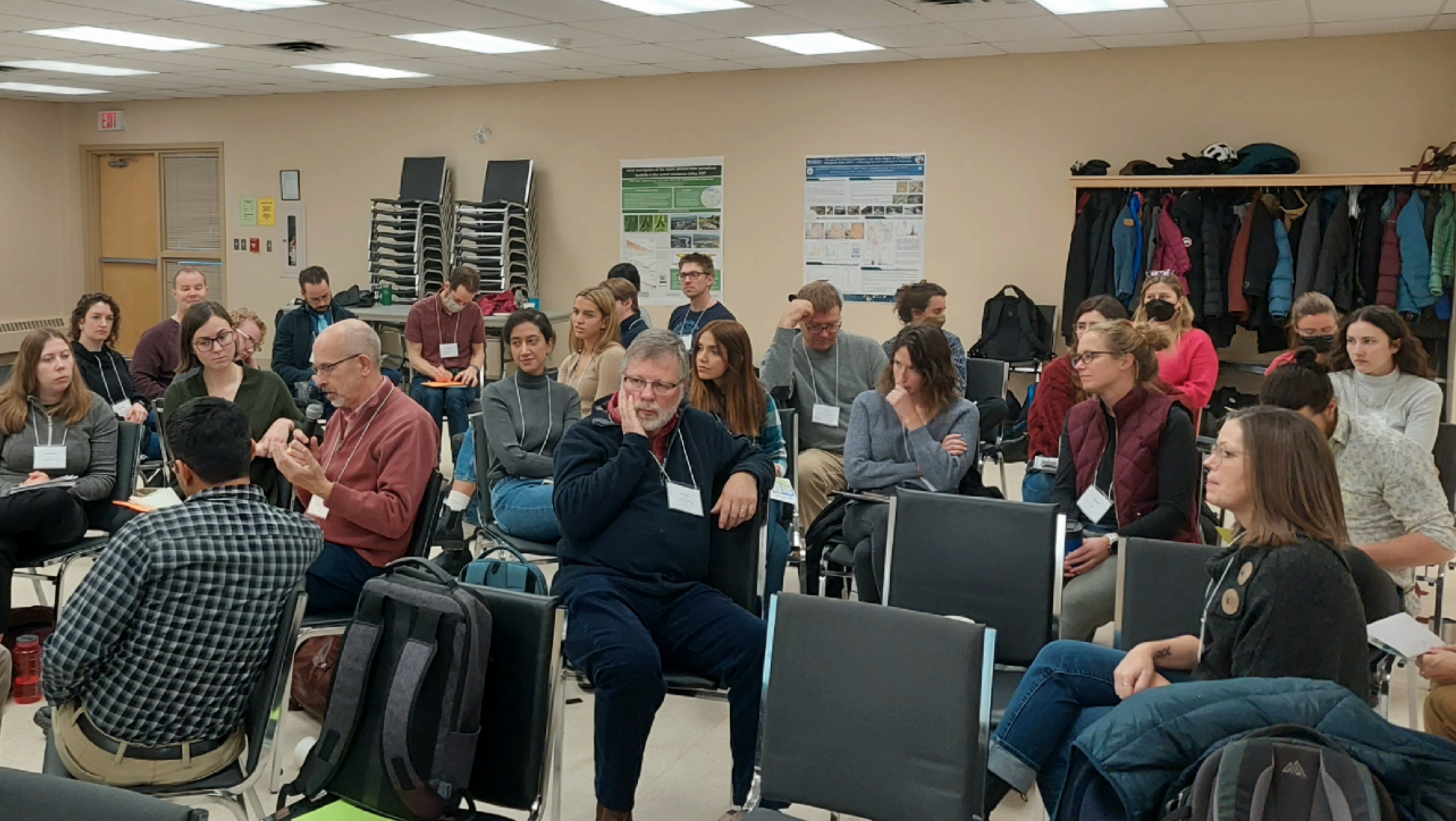
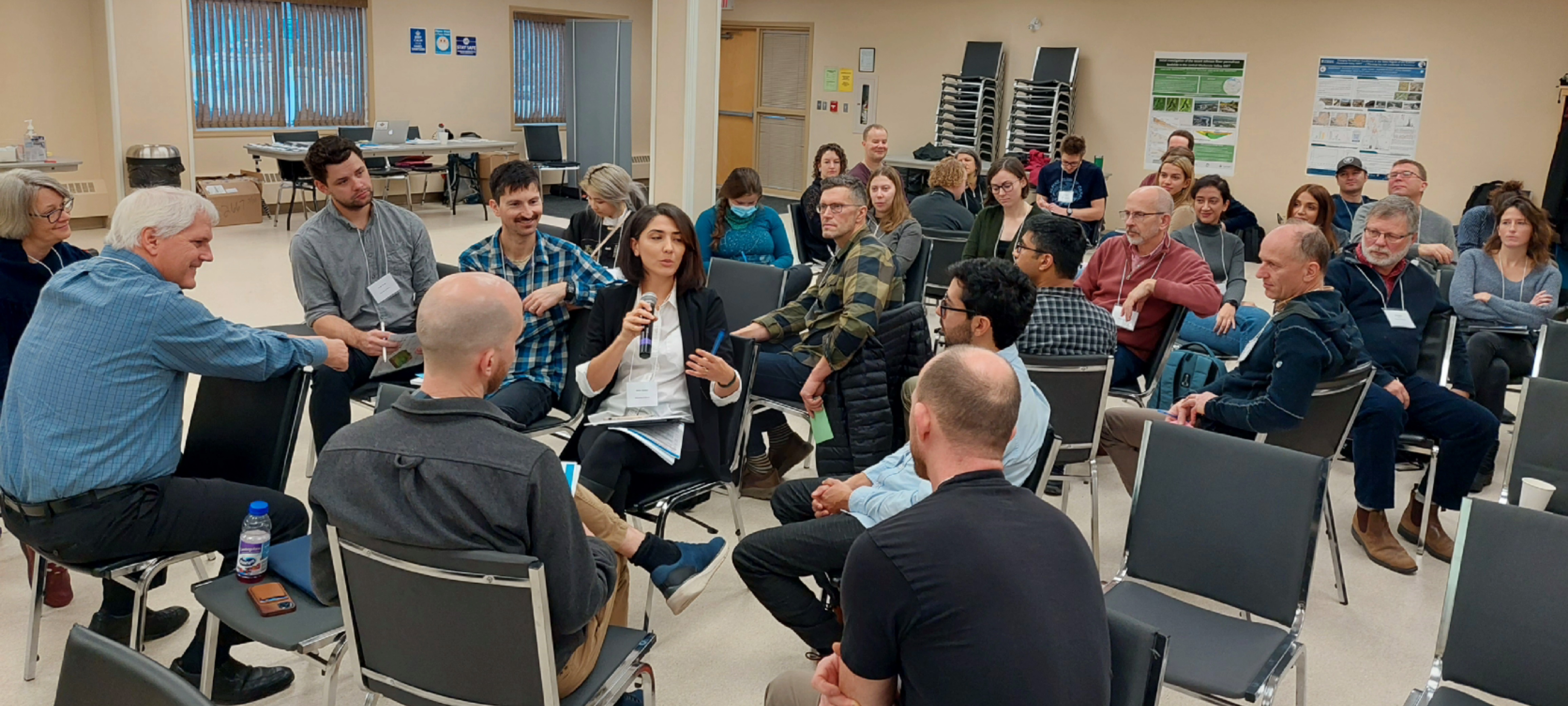
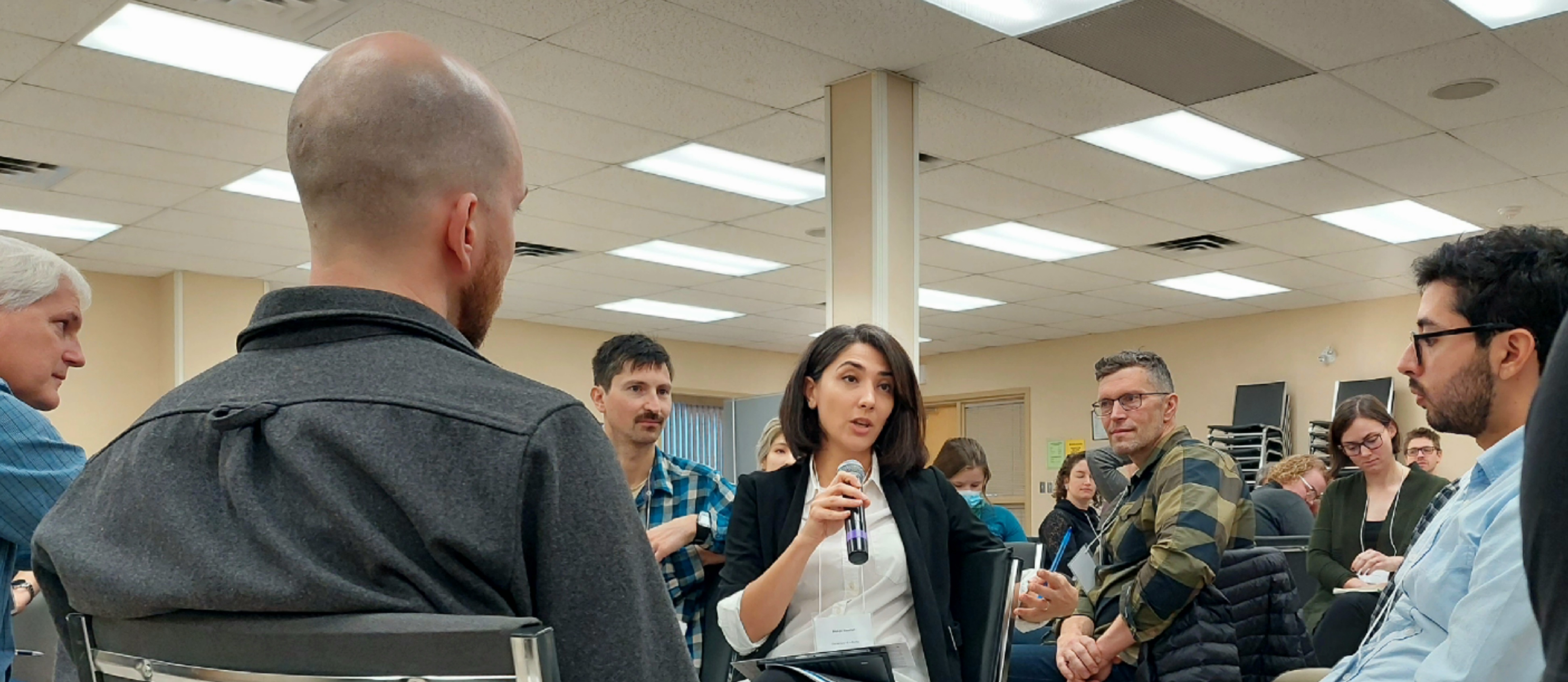
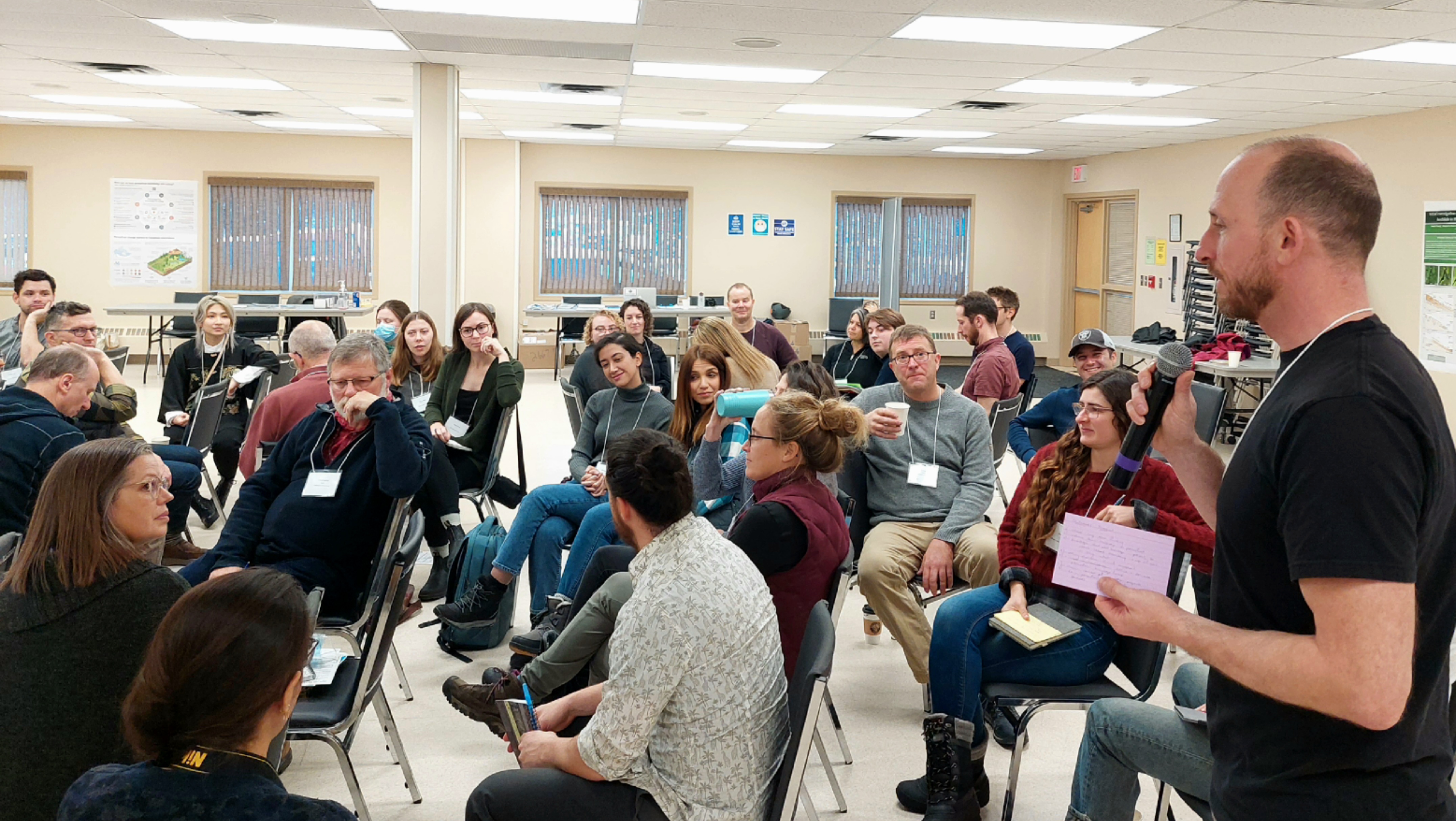
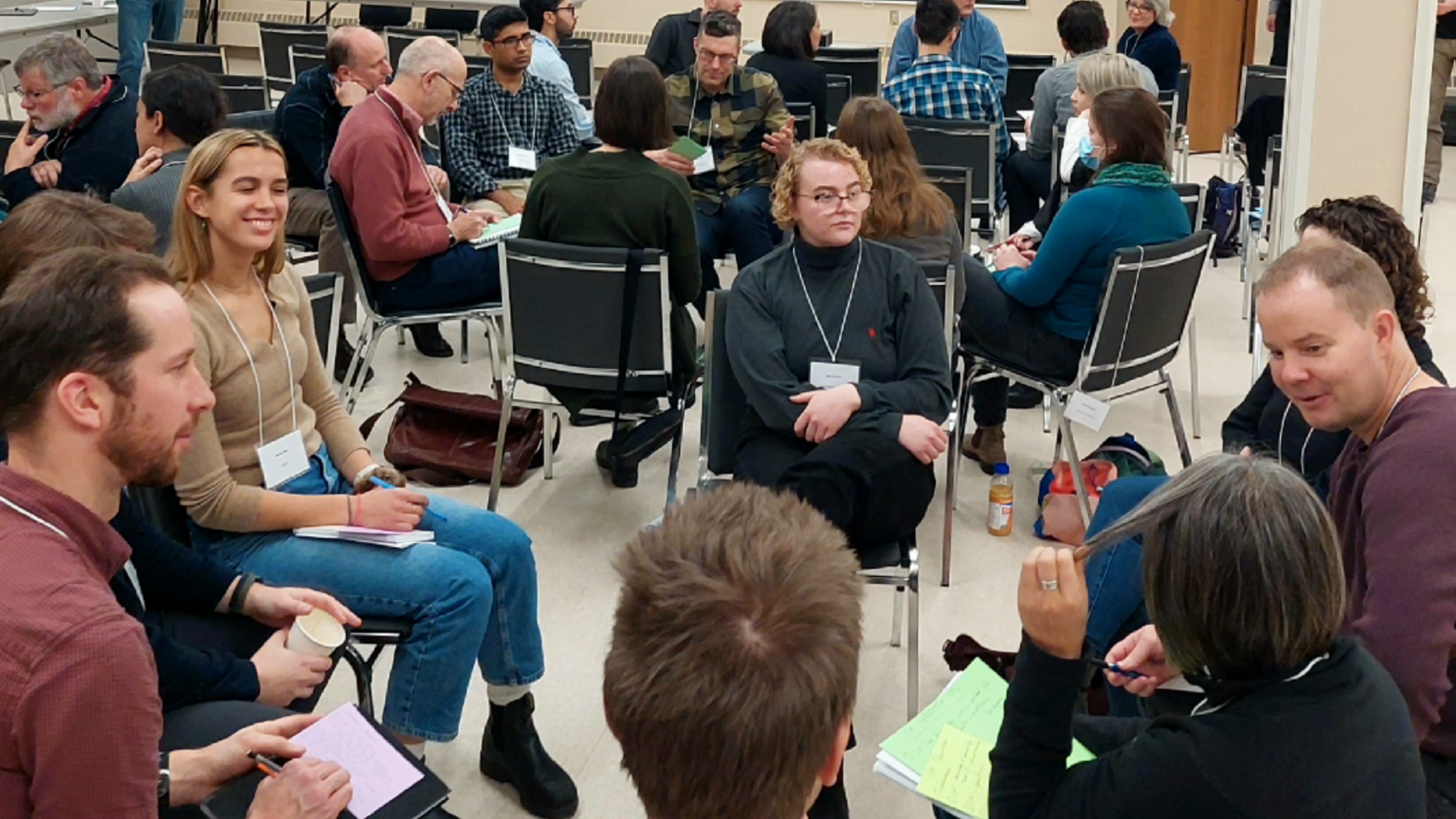
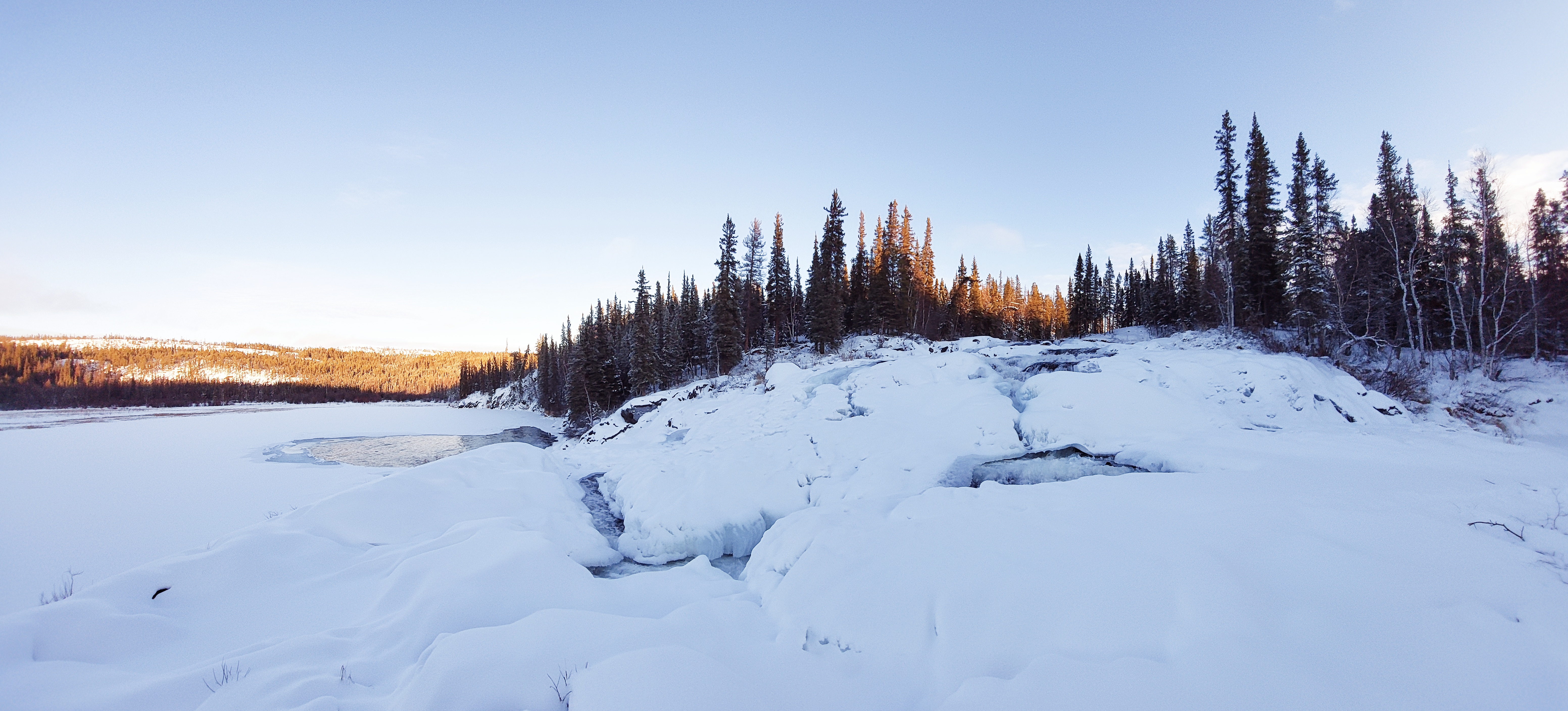
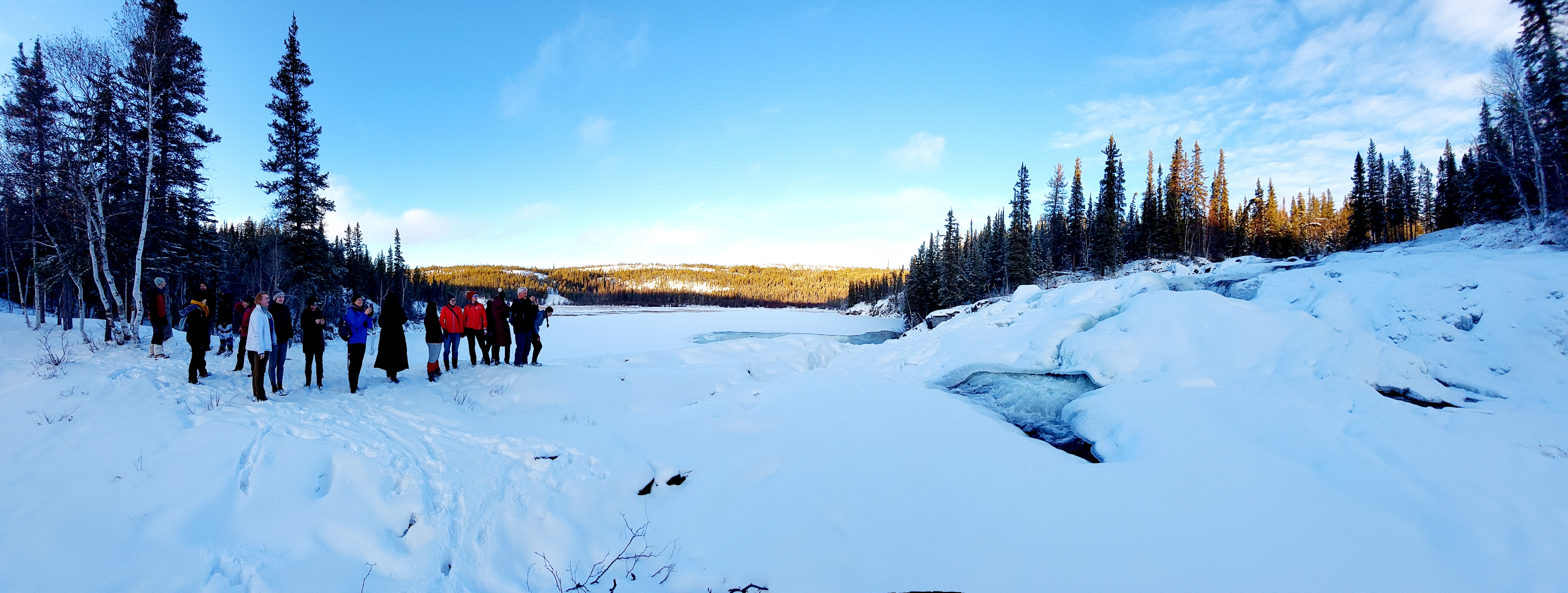
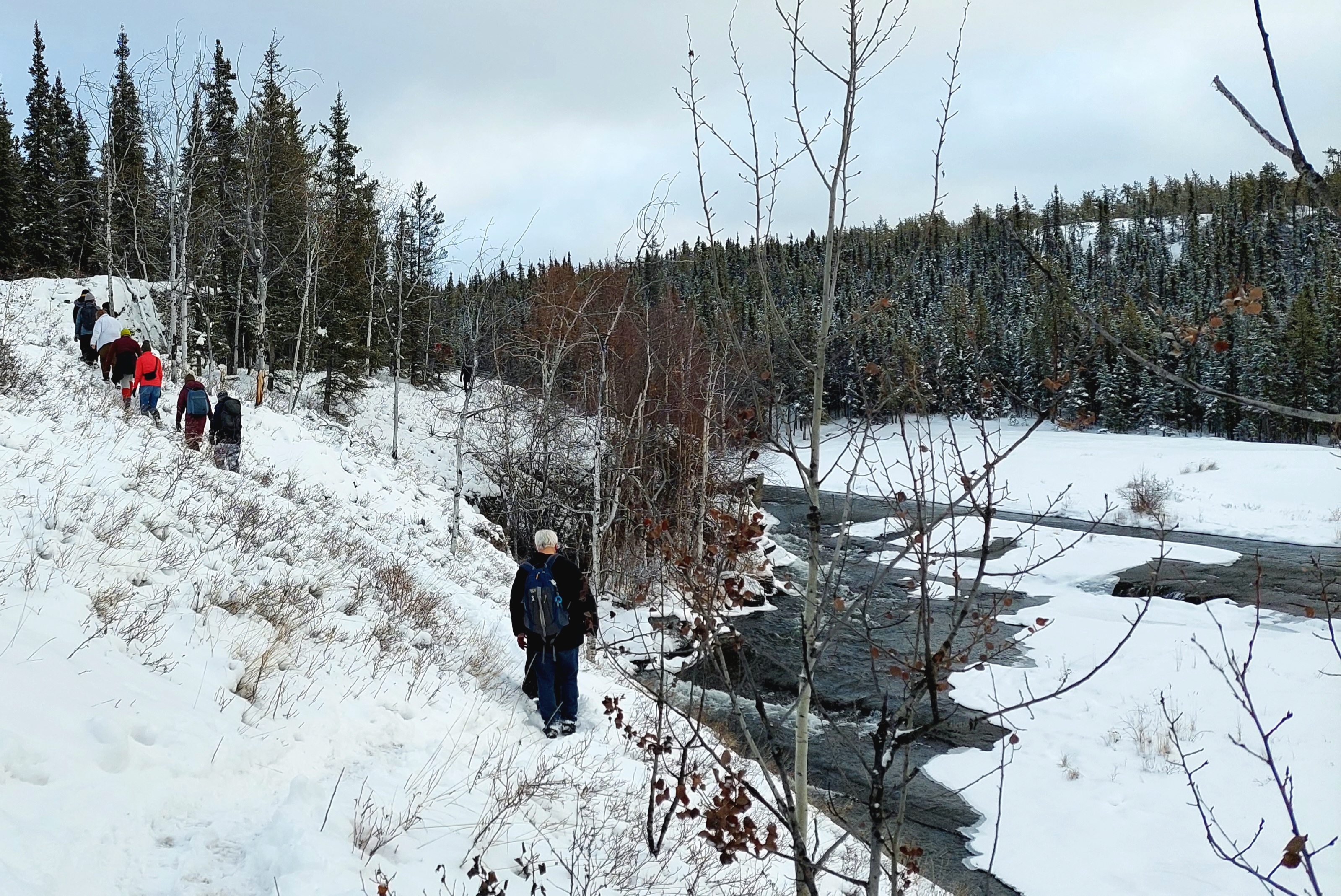
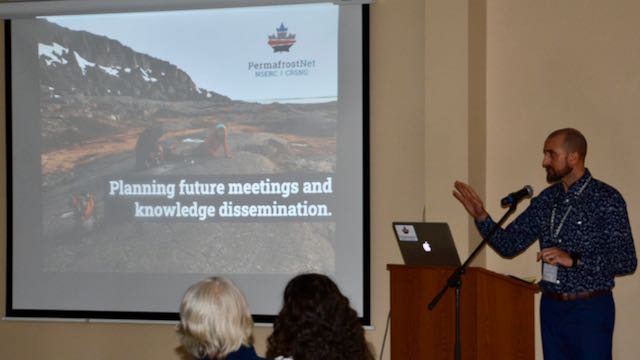
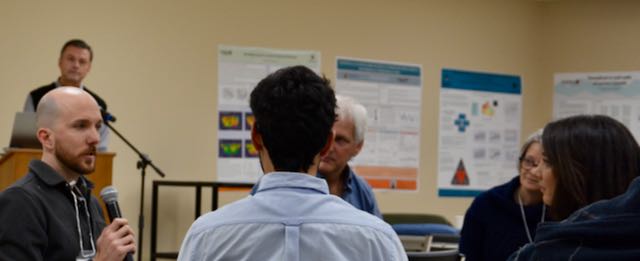
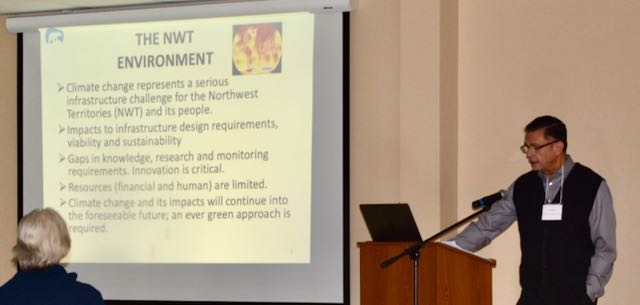
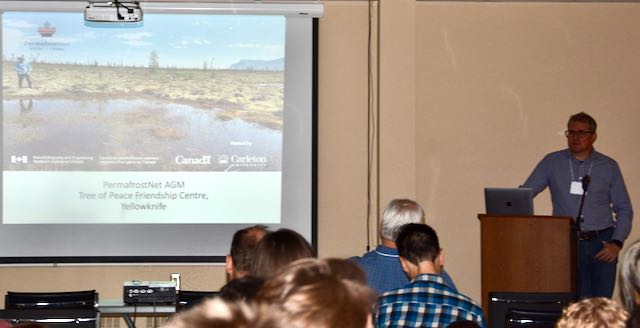
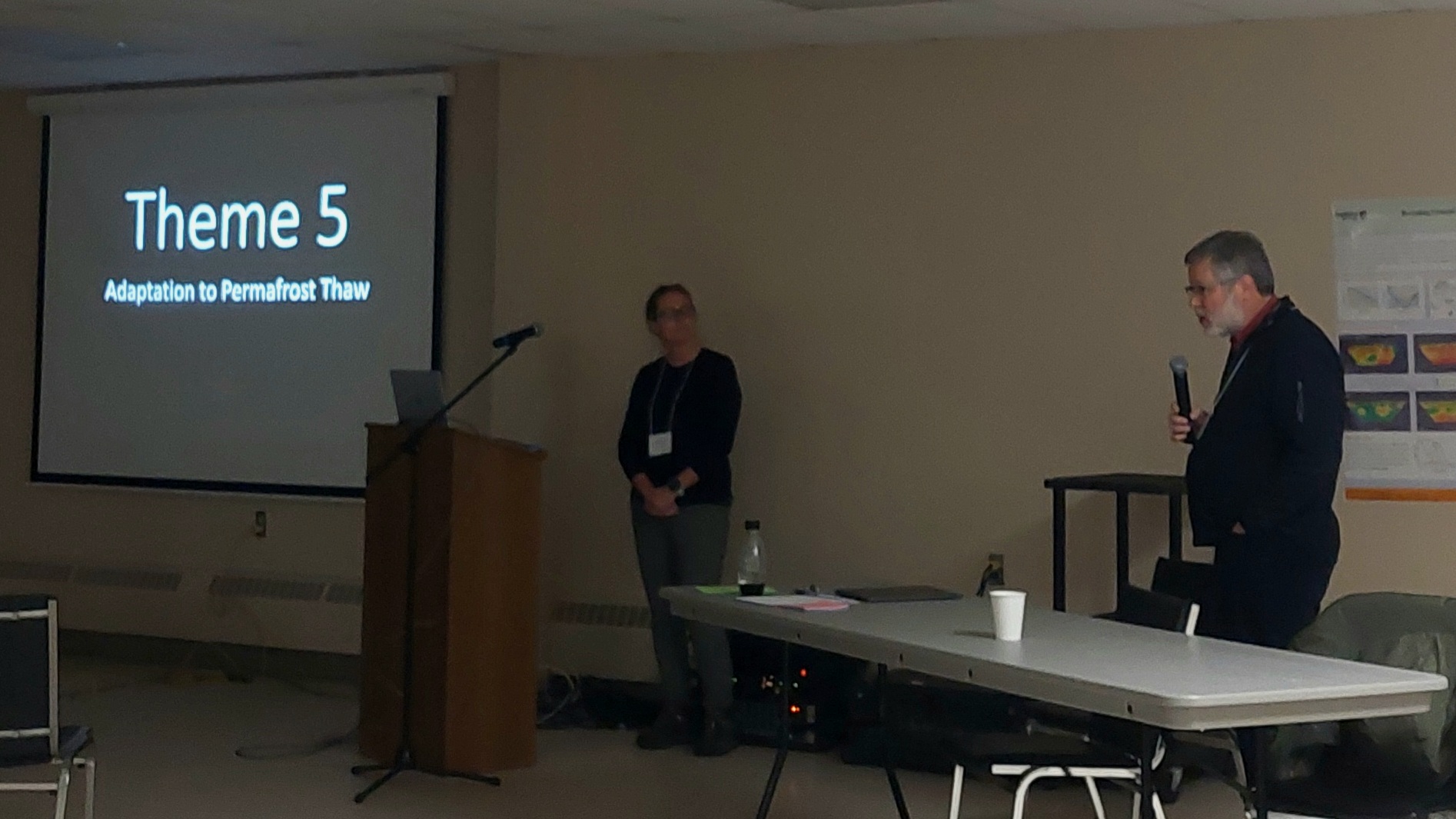
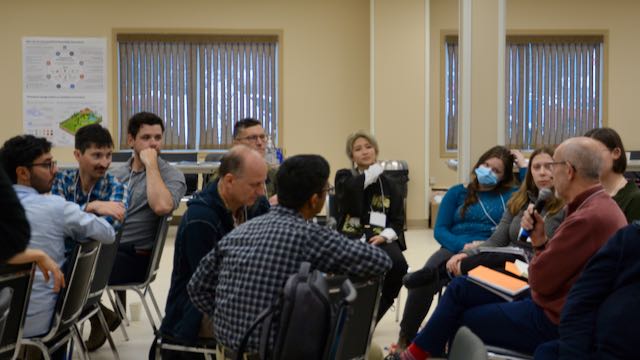
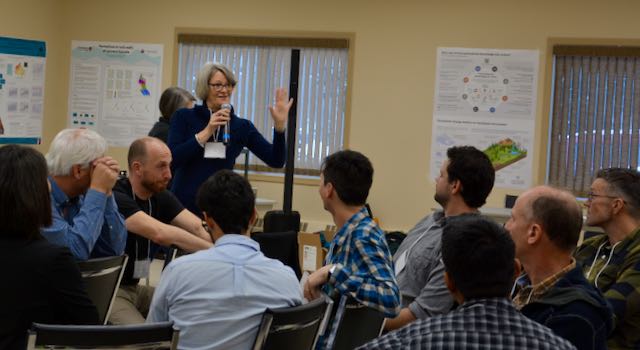
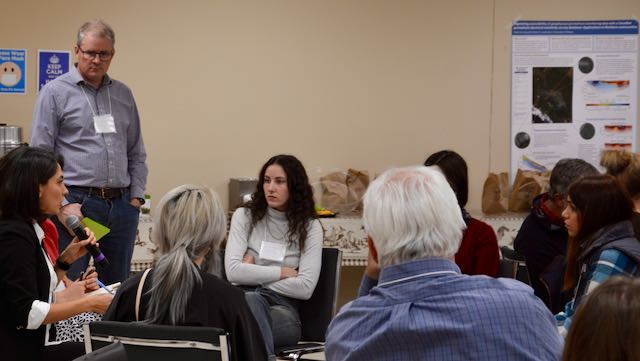
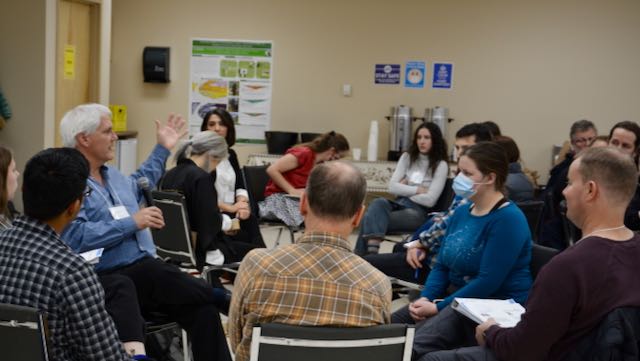
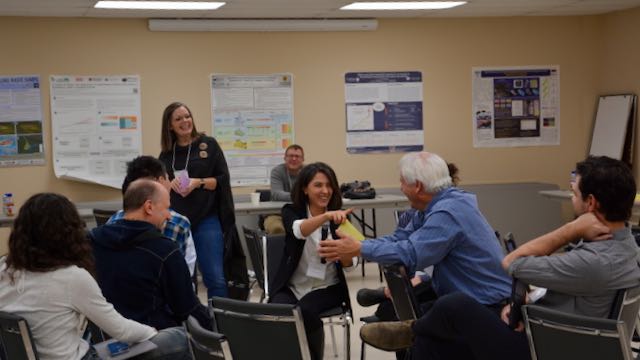
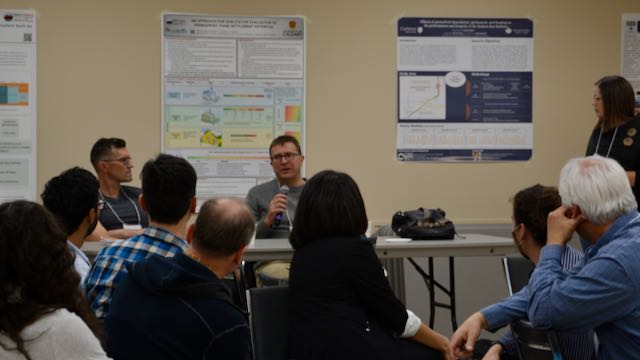
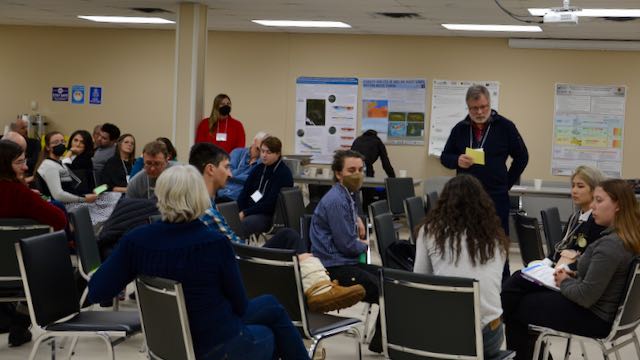
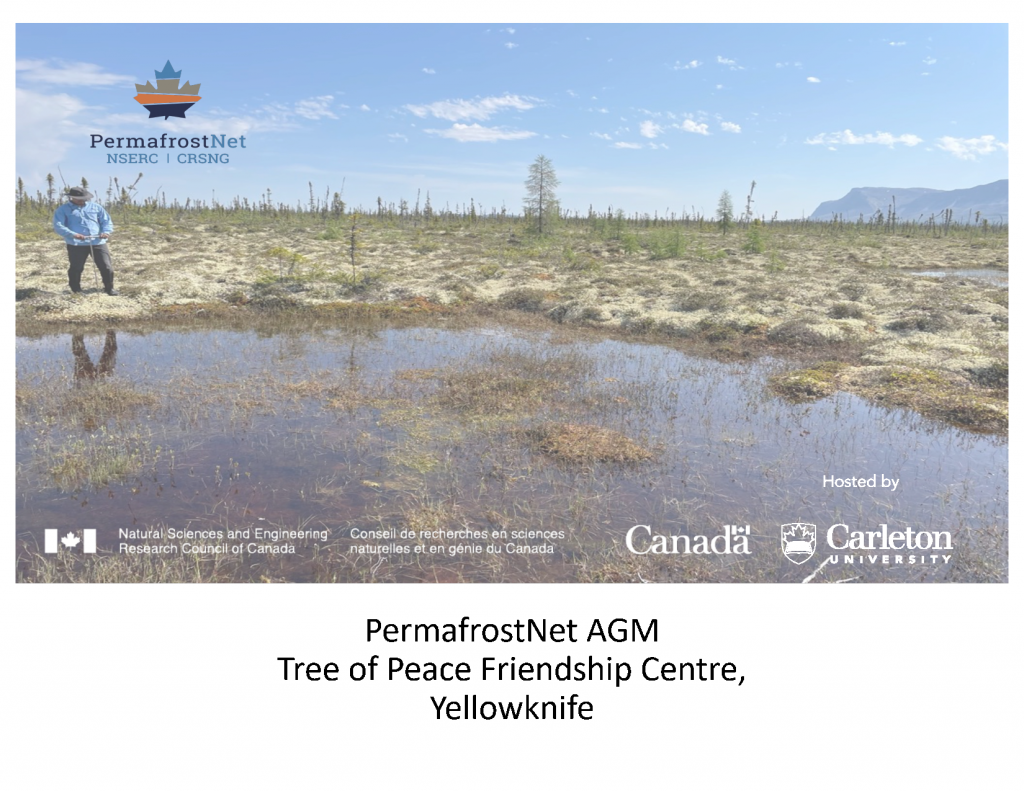
The 2022 NSERC PermafrostNet AGM and Yellowknife Geoscience Forum were held in Yellowknife between the 14th and 17th of November 2022.
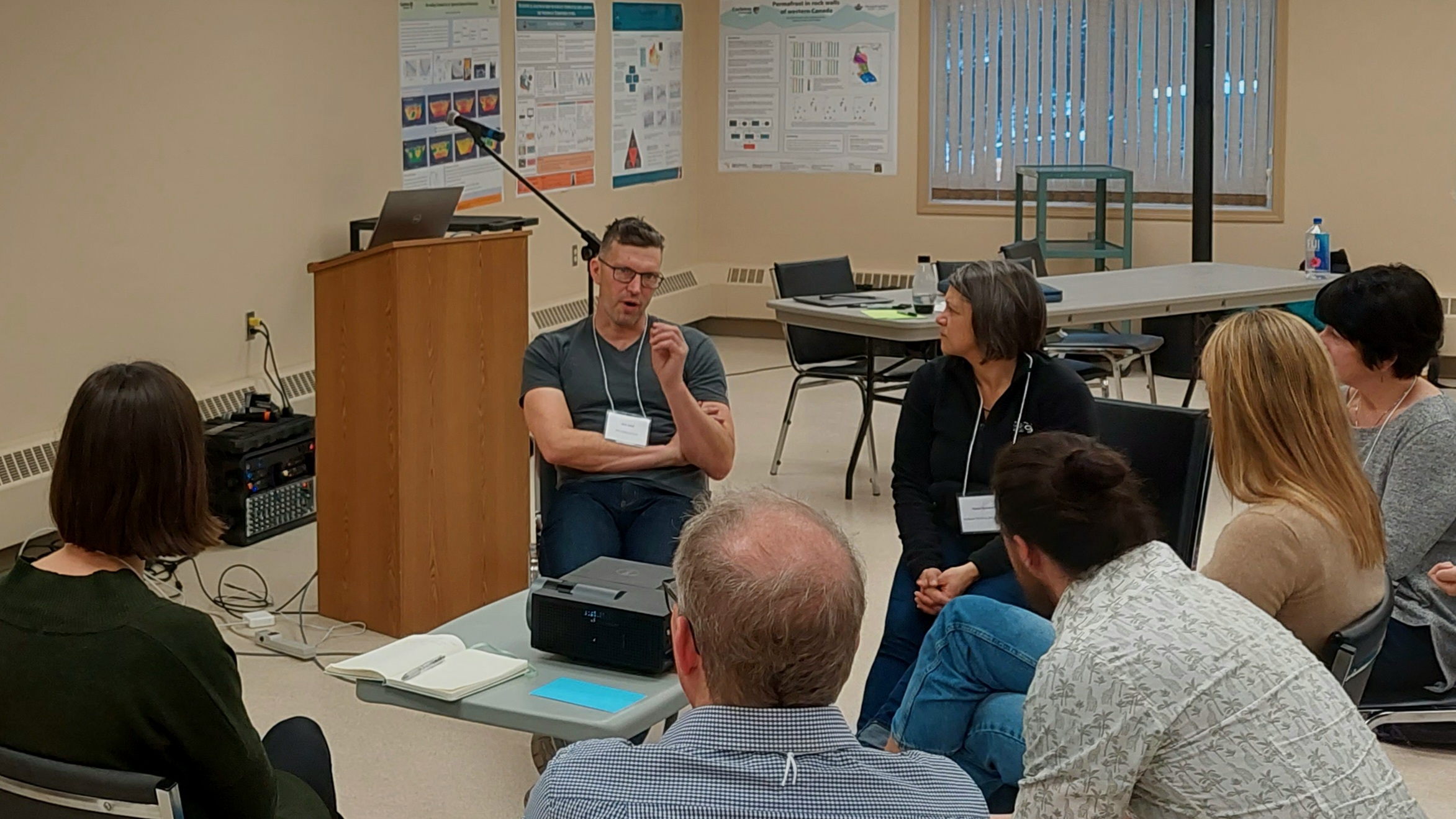
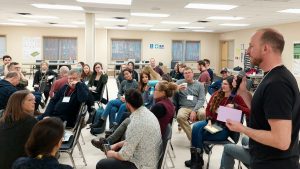
The 2022 AGM was an in-person meeting hosted in conjunction with the 50th Yellowknife Geoscience forum. The AGM focused on the needs of partners, the progress of the network projects and future activities and in the evening the network hosted an Open House for the public to find out more about the thawing permafrost and meet the researchers studying it.
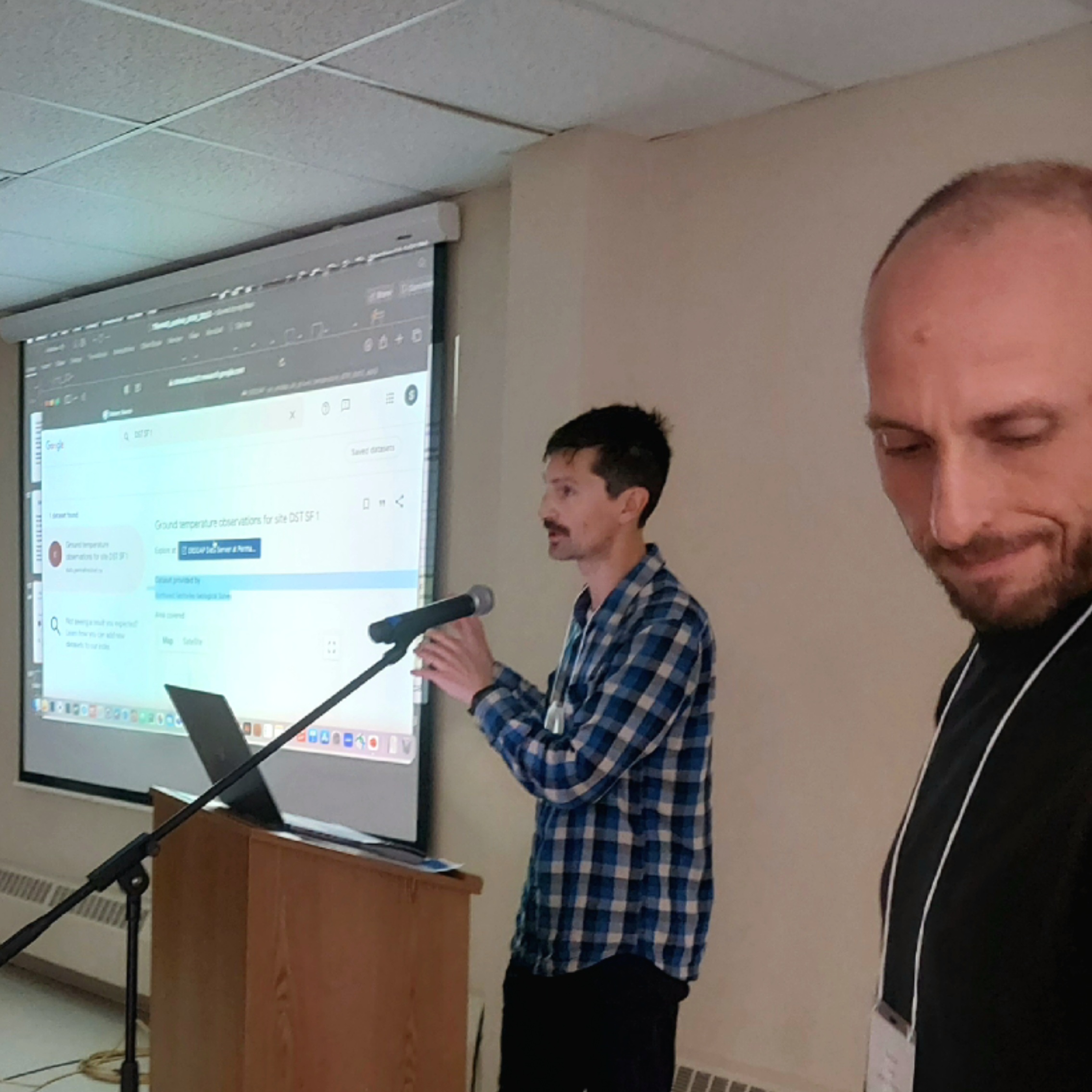
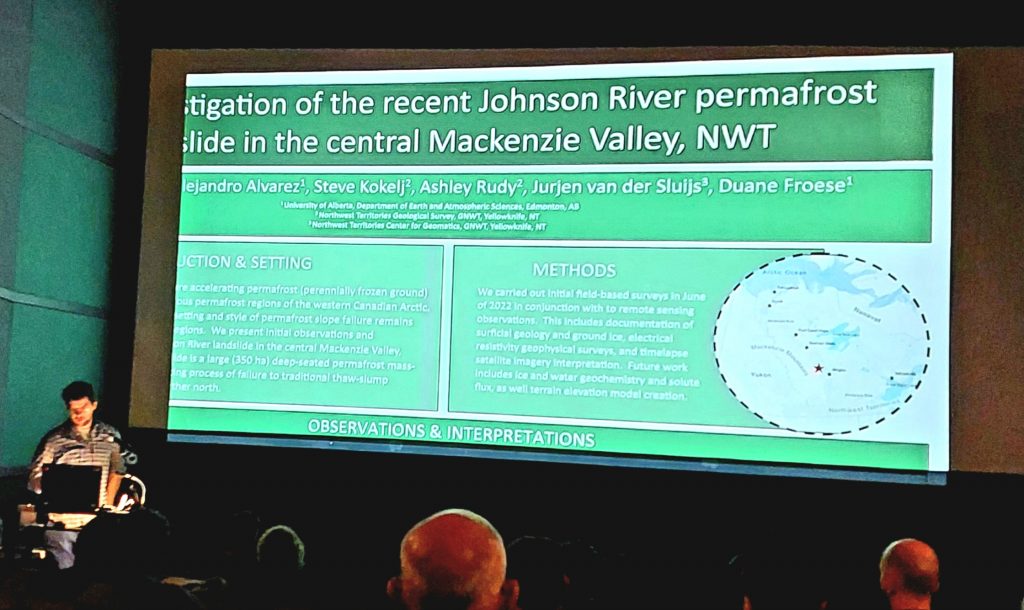
The Geoscience forum included two days of permafrost talks and posters, including two permafrost specific technical sessions: Changing Permafrost Landscapes, and Permafrost Monitoring Networks co-chaired by network members, as well as “Soapbox Talks” a scheduled 3-5 minute oral presentation by students who were presenting a poster. Soapbox talks were given with the poster as a single presentation slide projected on the screen.
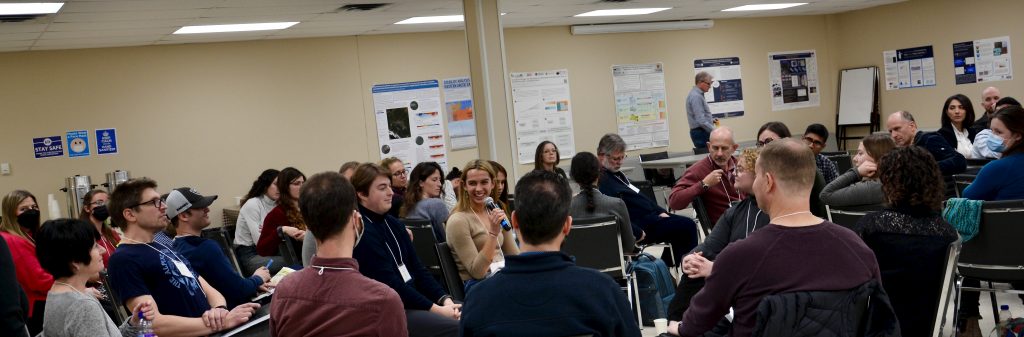
Quotes from discussions
Need infrastructure to handle large amounts of monitoring data.
Theme 1 discussion
Transportation corridors provide more sustainable monitoring areas.
Theme 2 discussion
Mindless monitoring is to be avoided.
Theme 2 discussion
Transition to monitoring within community by community.
Theme 2 discussion
You can’t adapt if you don’t know what is going to happen.
Theme 3 discussion
Don’t overburden communities, leverage existing links.
Capstone discussion
Stories are important.
Capstone discussion
Presentations
There were a range of research presentations at the AGM and by network members at the Geoscience forum in regular sessions and SoapBox short formats. Some of the presentations are available below.
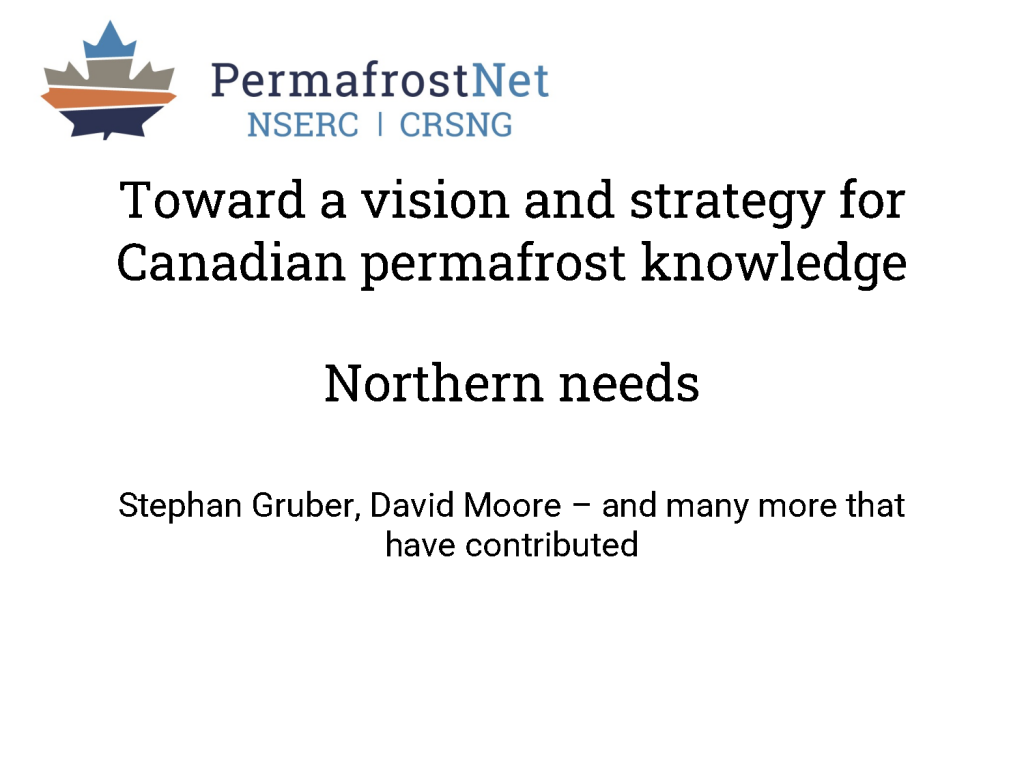
David Moore and Stephan Gruber
Titre: Toward a vision and strategy for Canadian permafrost knowledge and Northern needs.

Duane Froese (Theme 1)
Titre: Permafrost characterization and ground ice potential.

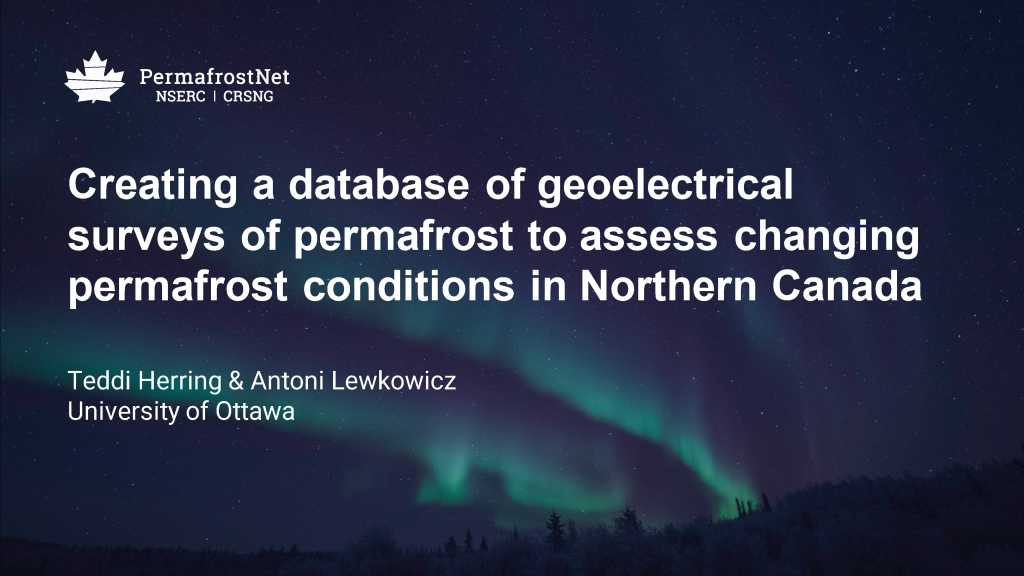
Teddi Herring (Theme 1)
Titre: Creating a database of geoelectrical surveys of permafrost to assess changing permafrost conditions in Northern Canada.
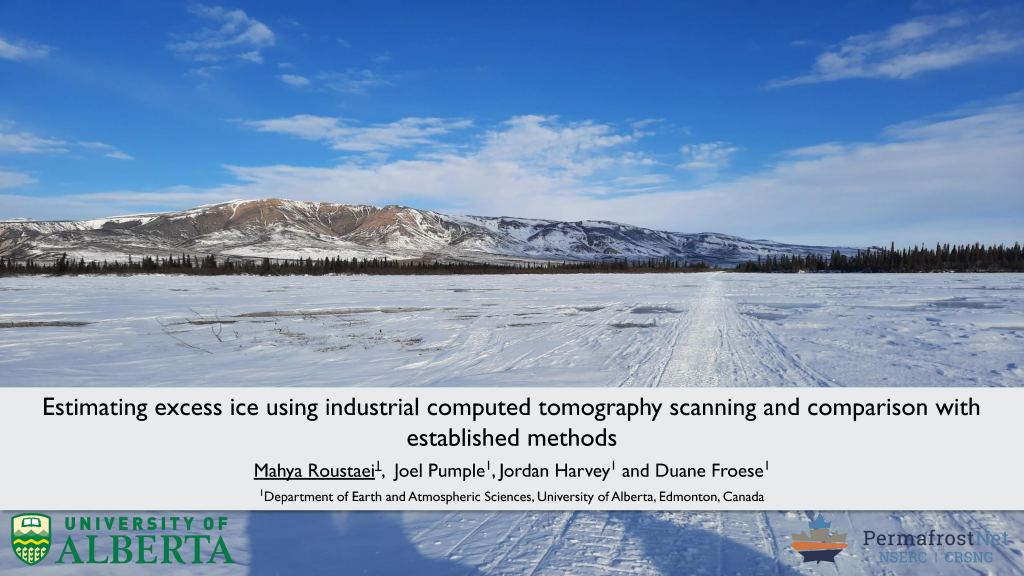
Mahya Roustaei (Theme 1)
Titre: Estimating excess ice using industrial computed tomography scanning and comparison with established methods.

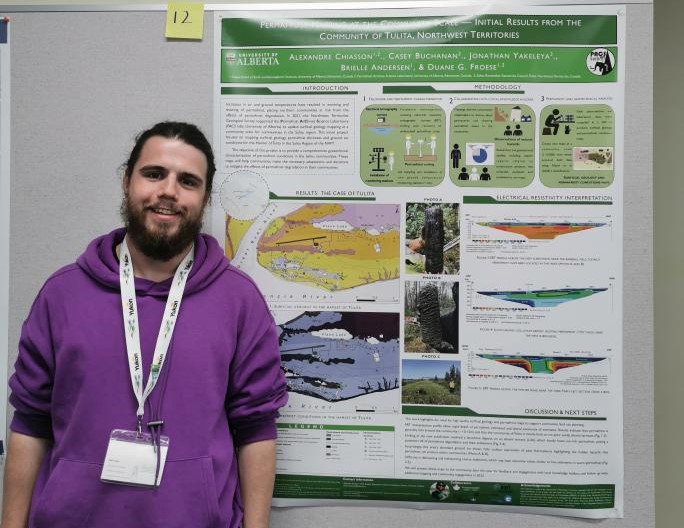
Alexandre Chiasson (Theme 1)
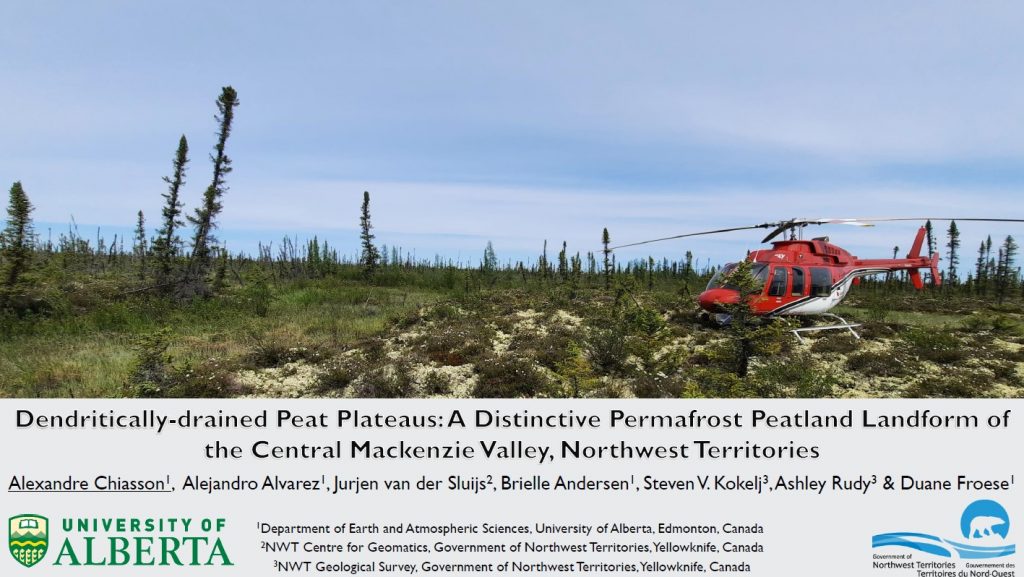
Titre: Dendritically-drained Peat Plateaus: A Distinctive Permafrost Peatland Landform of the Central Mackenzie Valley, Northwest Territories.
.
Toni Lewkowicz and Trevor Lantz (Theme 2)
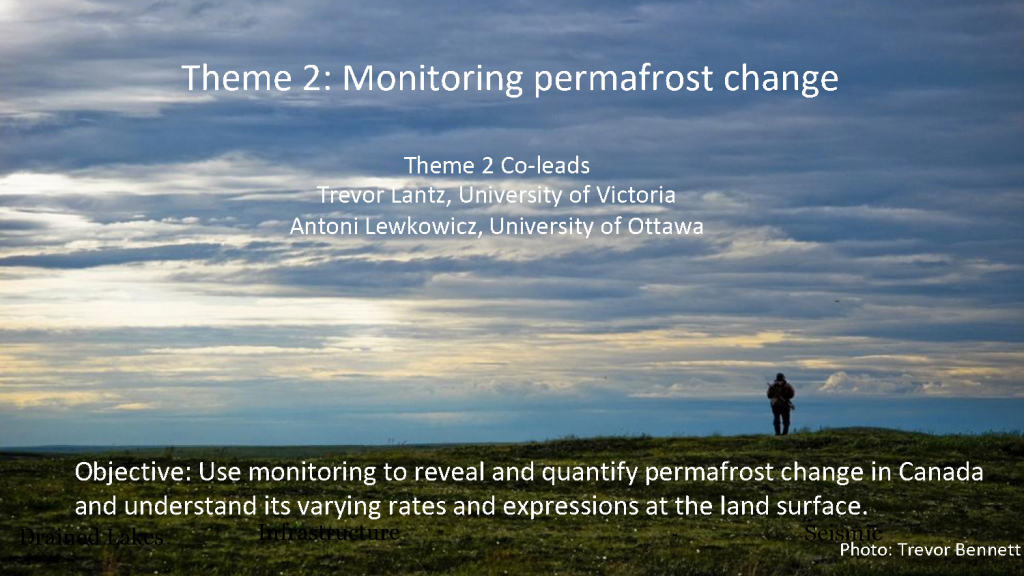
Titre: Monitoring Permafrost change.
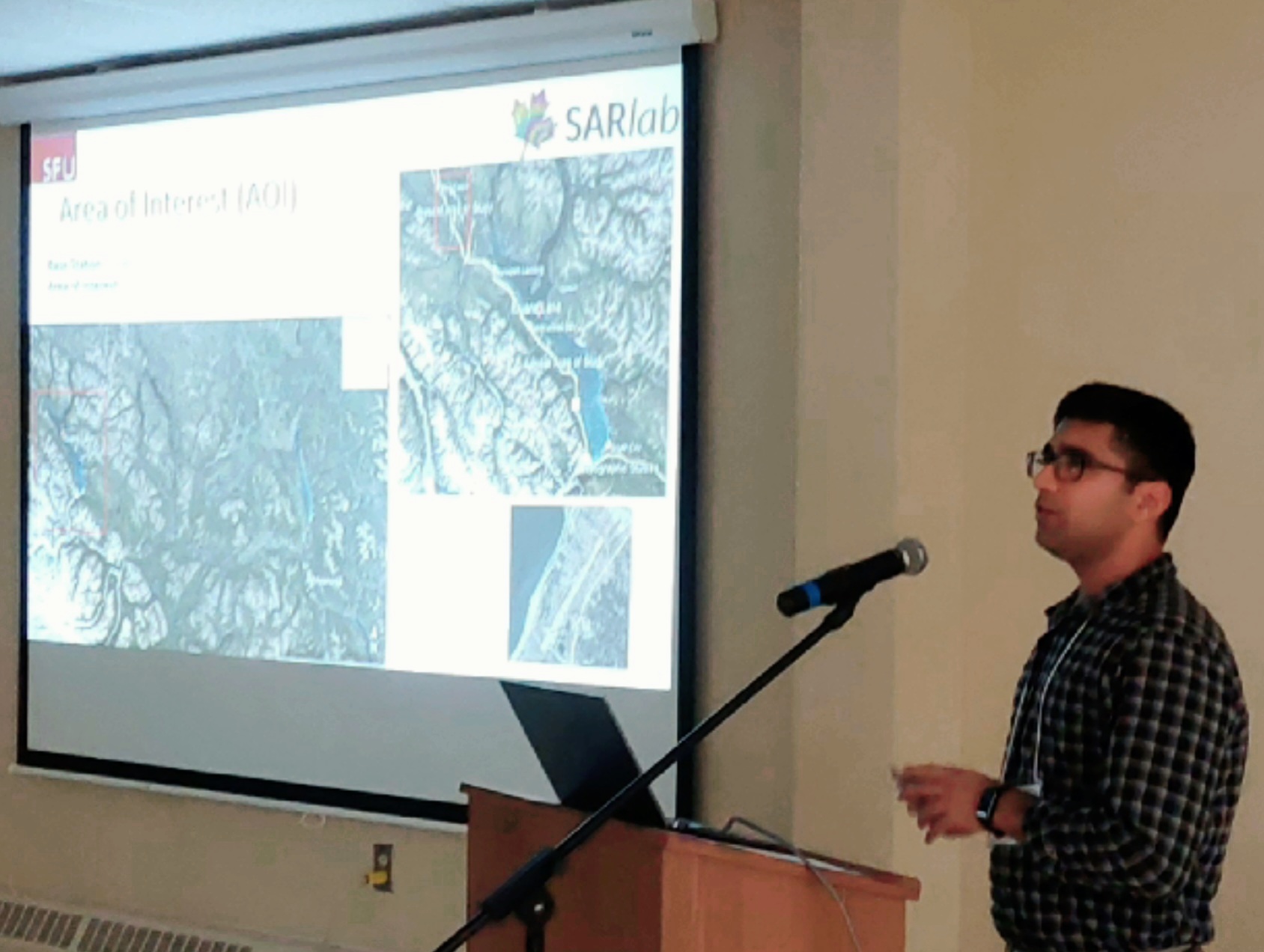
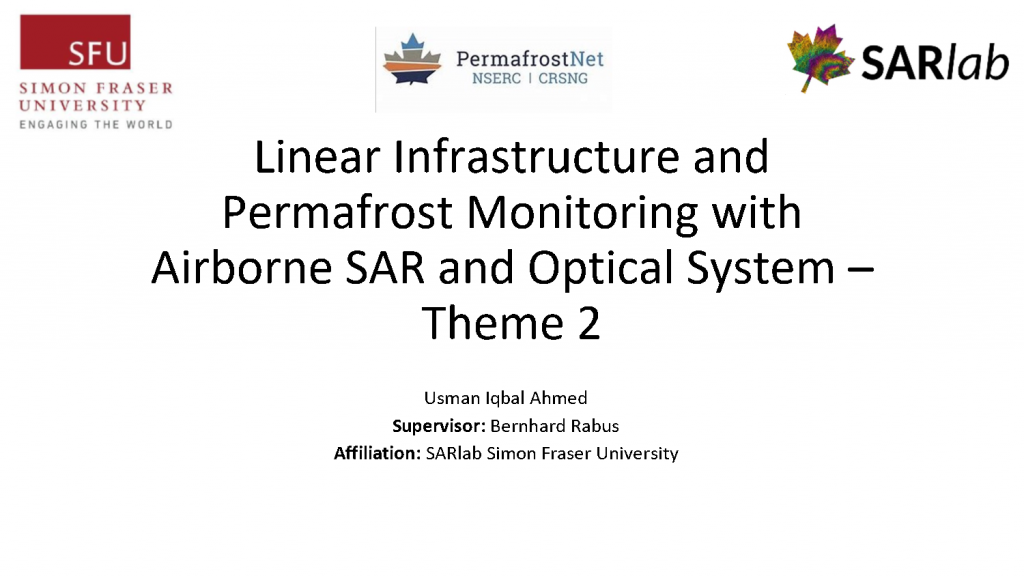
Usman Iqbal Ahmed (Theme 2)
Titre: Linear Infrastructure and Permafrost Monitoring with Airborne SAR and Optical System.
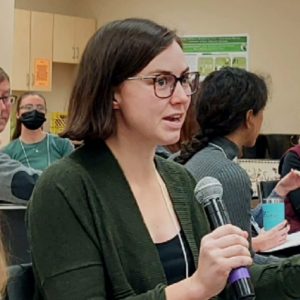
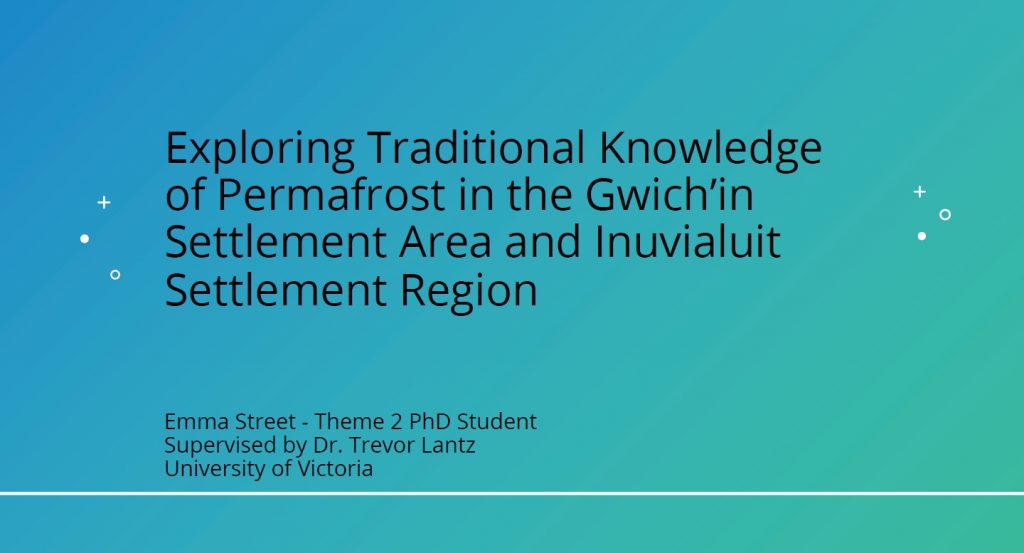
Emma Street (Theme 2)
Titre: Exploring Traditional Knowledge of Permafrost in the Gwich’in Settlement Area and Inuvialuit Settlement Region.
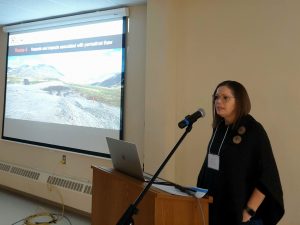
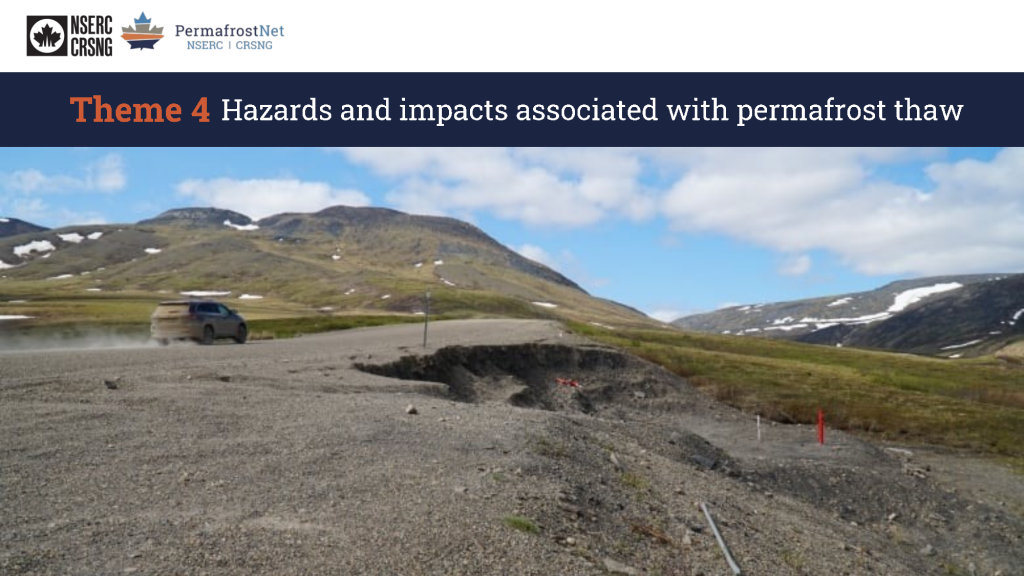
Jocelyn Hayley (Theme 4)
Titre: Hazards and impacts associated with permafrost thaw.
Multi-year permafrost change tracked using ground temperatures and repeat electrical resistivity tomography, Alaska Highway corridor by Antoni Lewkowicz et al.
Monitoring and Long-term Predictions of Thermoprobe Performance at Gunghi Creek, NWT by Ryley Beddoe et al.
Estimating excess ice using industrial computed tomography scanning and comparison with established methods by Mahya Roustae et al.
Creating a database of geoelectrical surveys of permafrost to assess changing permafrost conditions in Northern Canada by Teddi Herring et al.
Dendritically-drained peat plateaus: a distinctive permafrost peatland landform of the central Mackenzie Valley, Northwest Territories by Alexandre Chiasson et al.
The Northwest Territories Thermokarst Mapping Collective: A northern-driven collaborative mapping framework for understanding the distribution and effects of permafrost thaw by Steve Kokelj et al.
Measuring coastal erosion in a permafrost environment by Brian Moorman et al.
Inventory of thaw-driven mass wasting in the NWT by Ashley Rudy et al.
Statistical analysis of ground surface temperature simulations under different testing conditions in the Northwest Territories Tundra by Hannah Macdonell et al.
Linear Infrastructure & Permafrost Monitoring with Airborne SAR and Photogrametry Data by Usman Iqbal Ahmedet al.
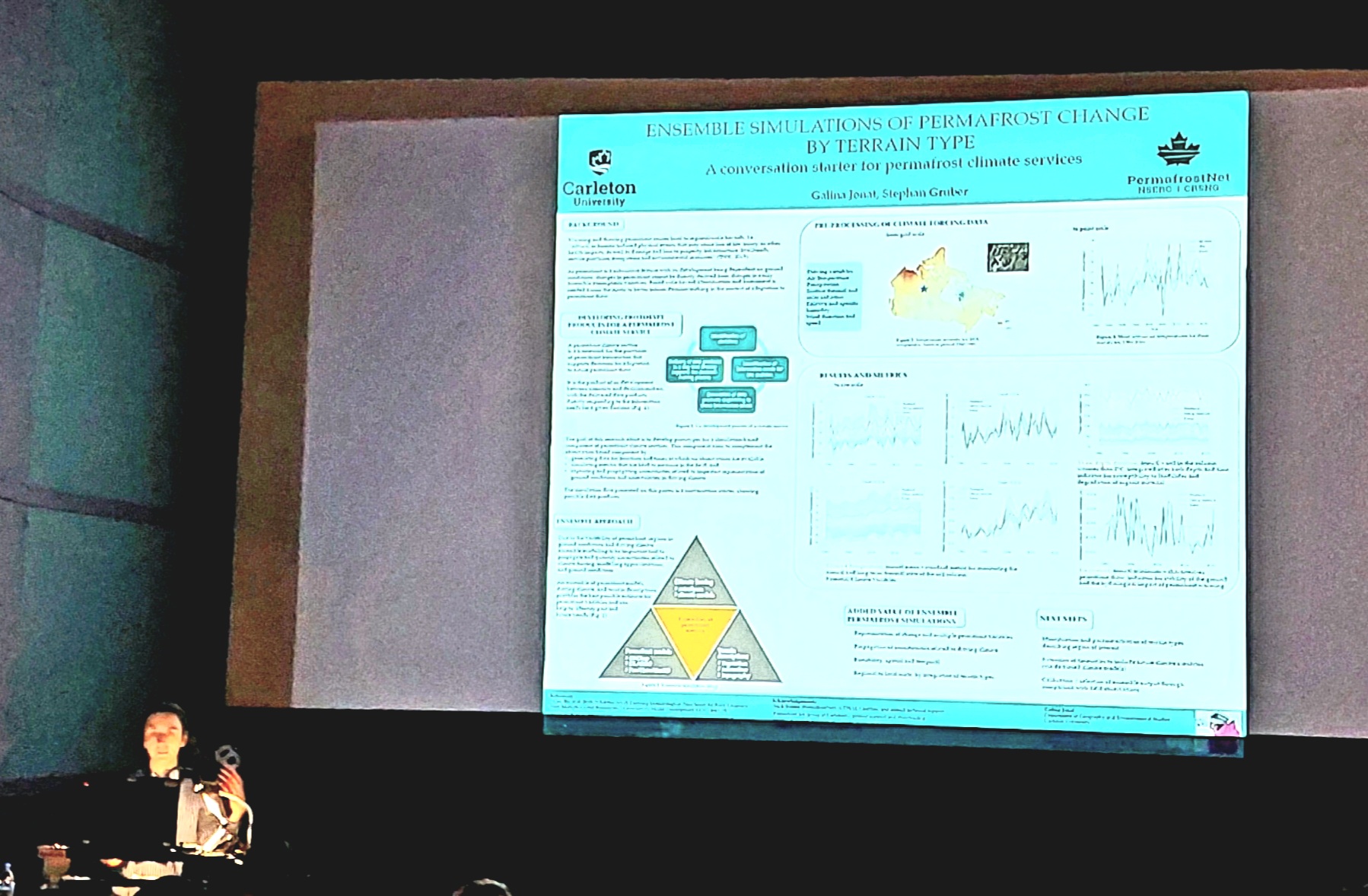
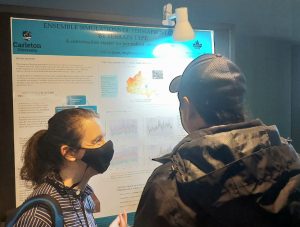
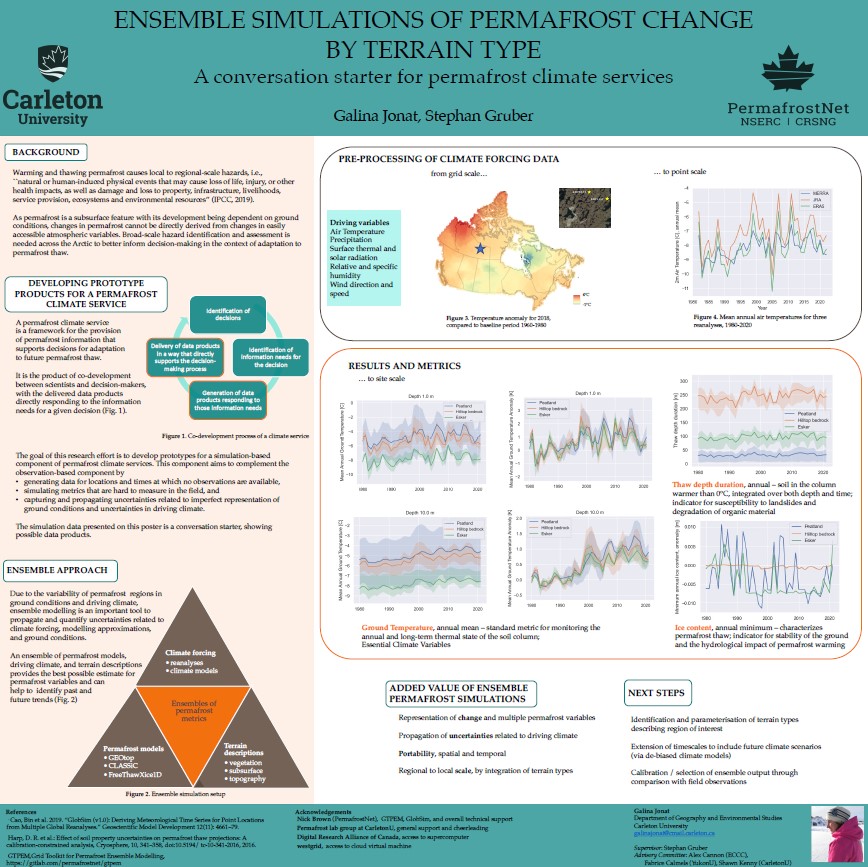
Ensemble simulations of transient permafrost change by terrain type – a conversation starter for developing permafrost climate services by Galina Jonat et al.
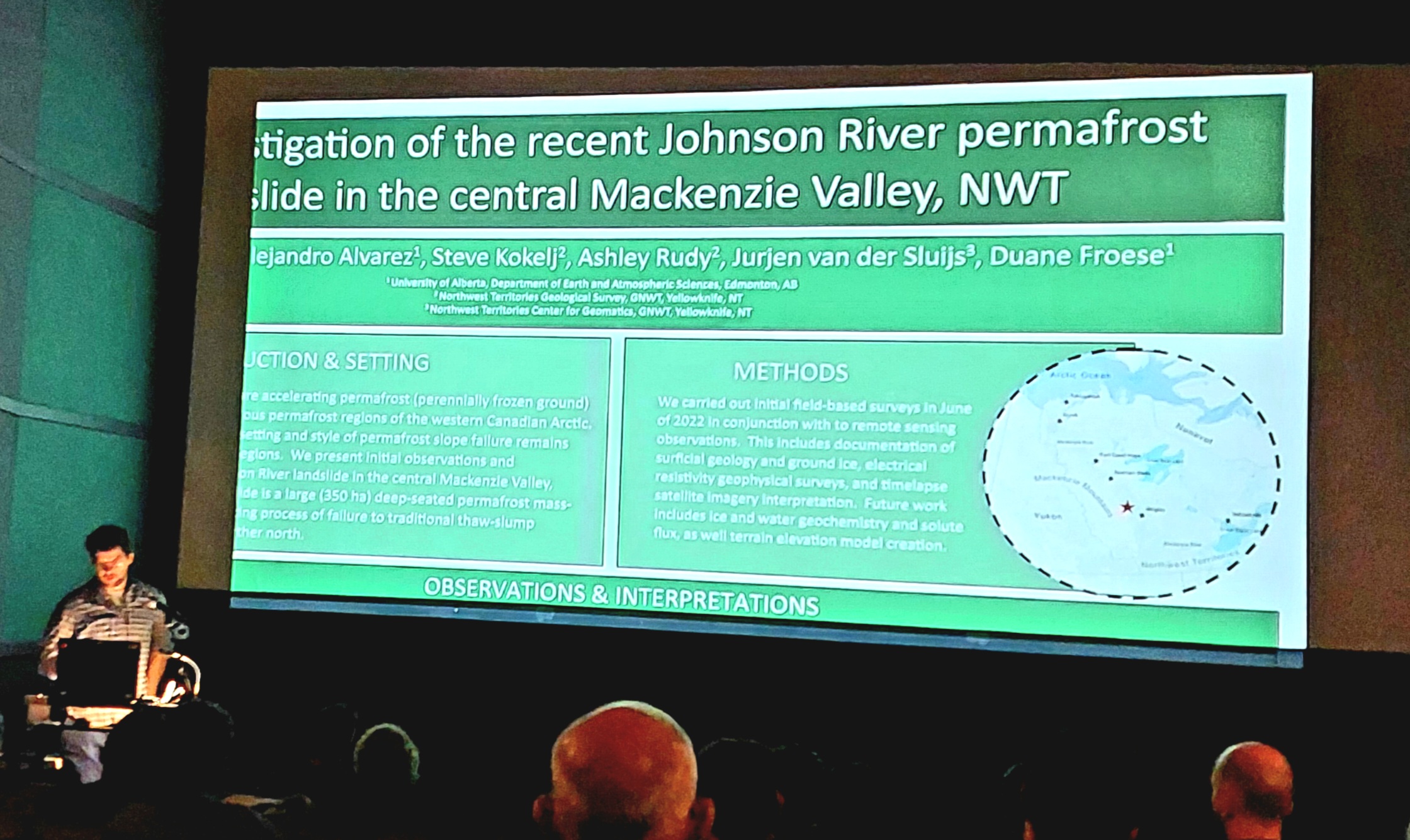
Setting and failure mechanisms of the recent Johnson River permafrost landslide in the central Mackenzie Valley, NWT by Joseph Young et al.
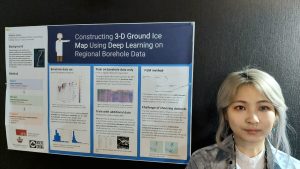
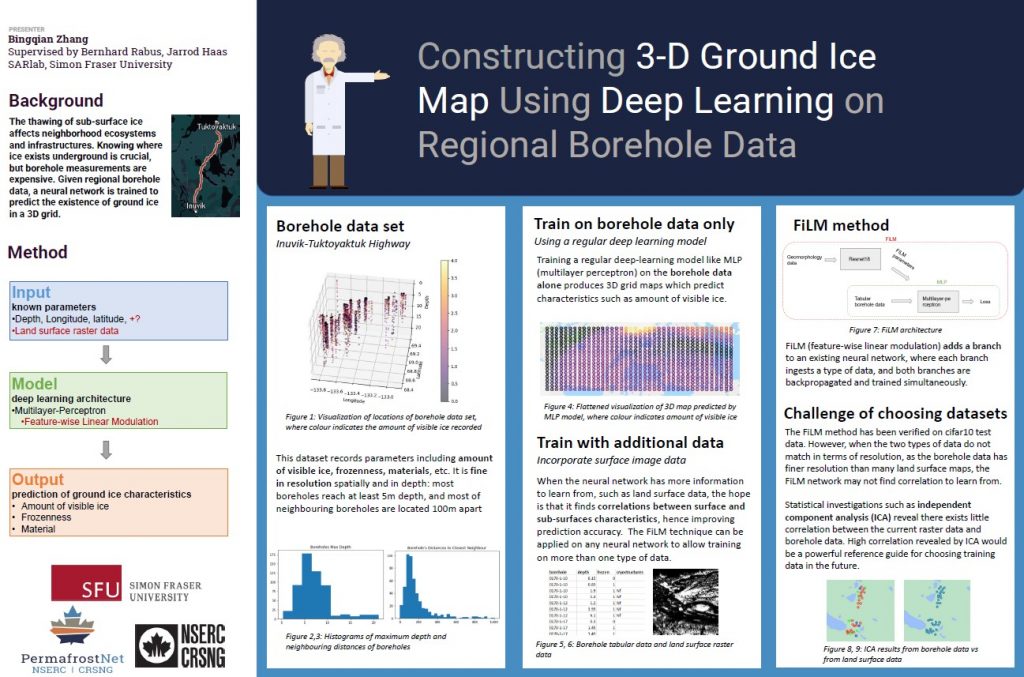
Next Generation 3D Ground Ice Map by Bingqian Zhang.
Posters
Posters were presented by network members at both the NSERC PermafrostNet AGM and the Geoscience forum. You can see the posters below.
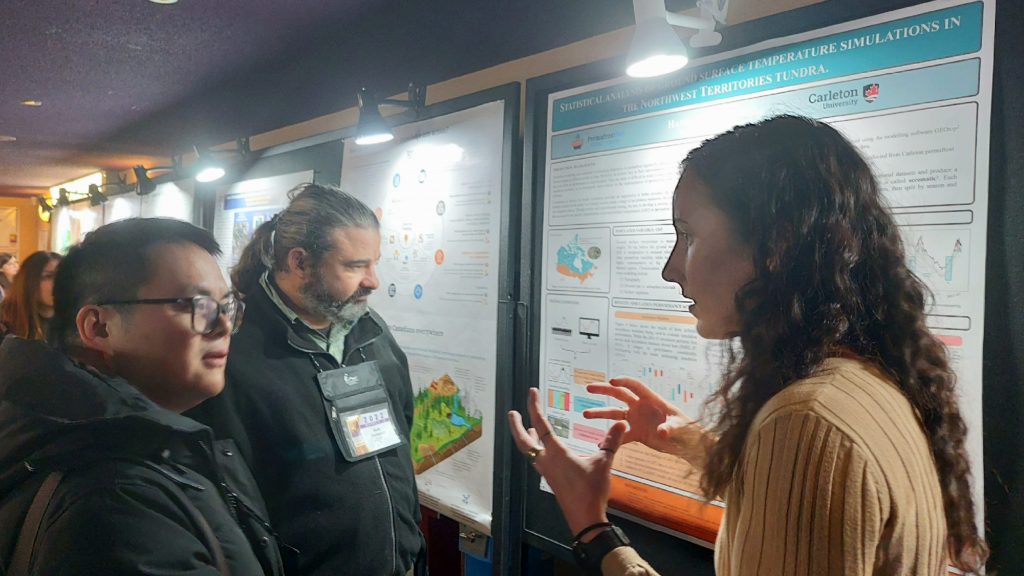
Best student poster presentation
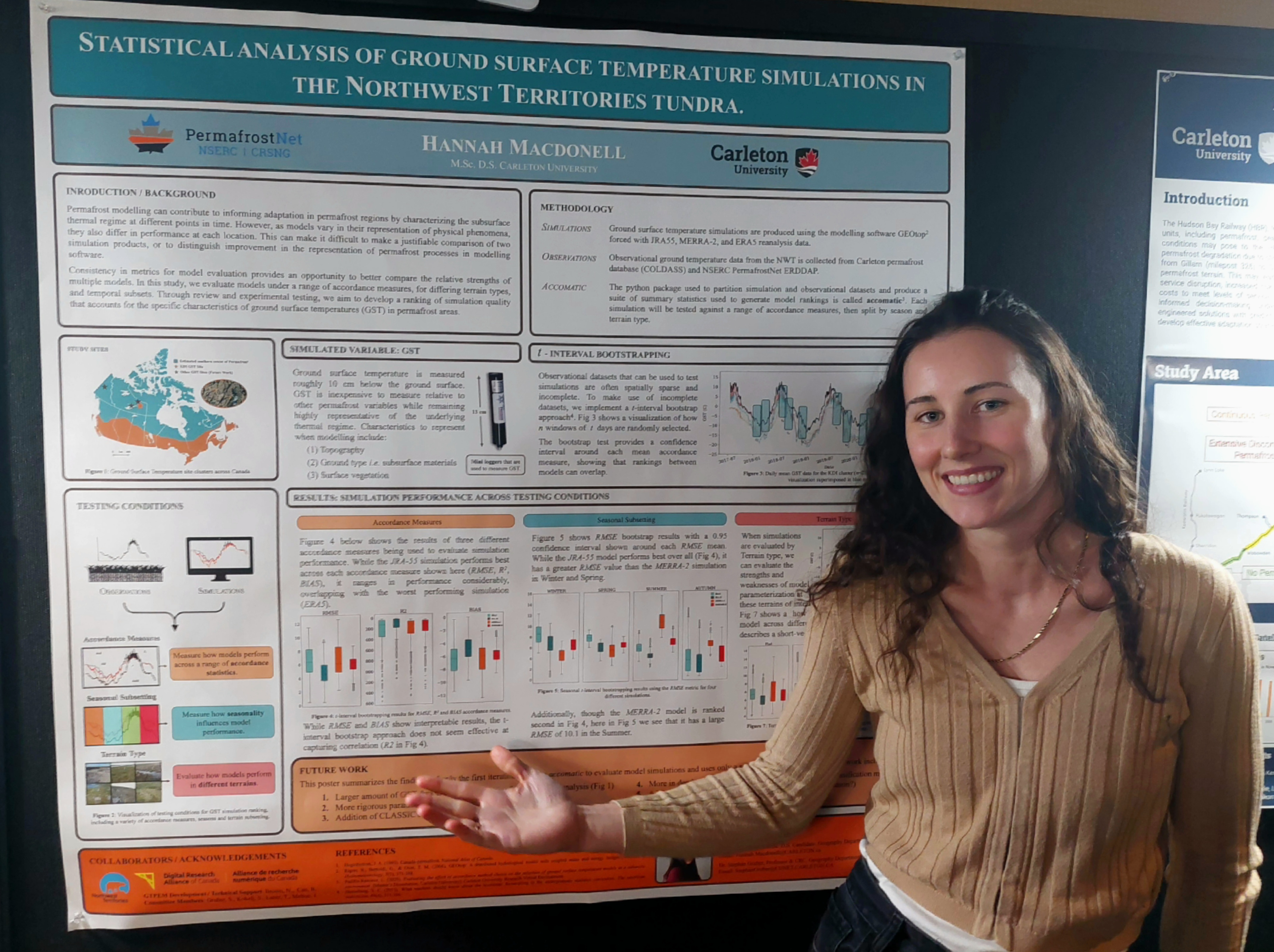
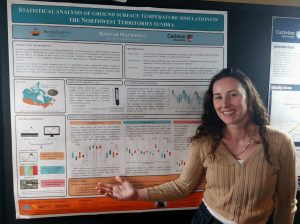
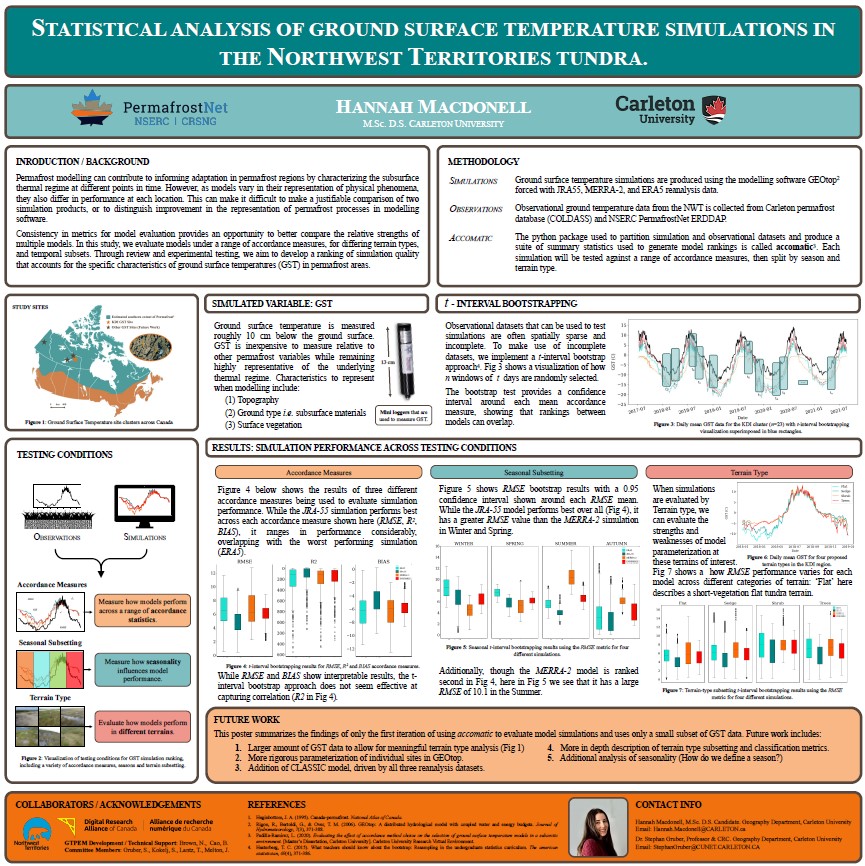
NAPEG’s education foundation presented an award for best poster presentation to Hannah Macdonell (Carleton University) for her poster titled: Statistical analysis of ground surface temperature simulations under different testing conditions in the Northwest Territories Tundra.
Congratulations to Hannah and thank you to all the the poster and soapbox talk presenters.
Click on the right-hand side images below to see the full poster pdf.
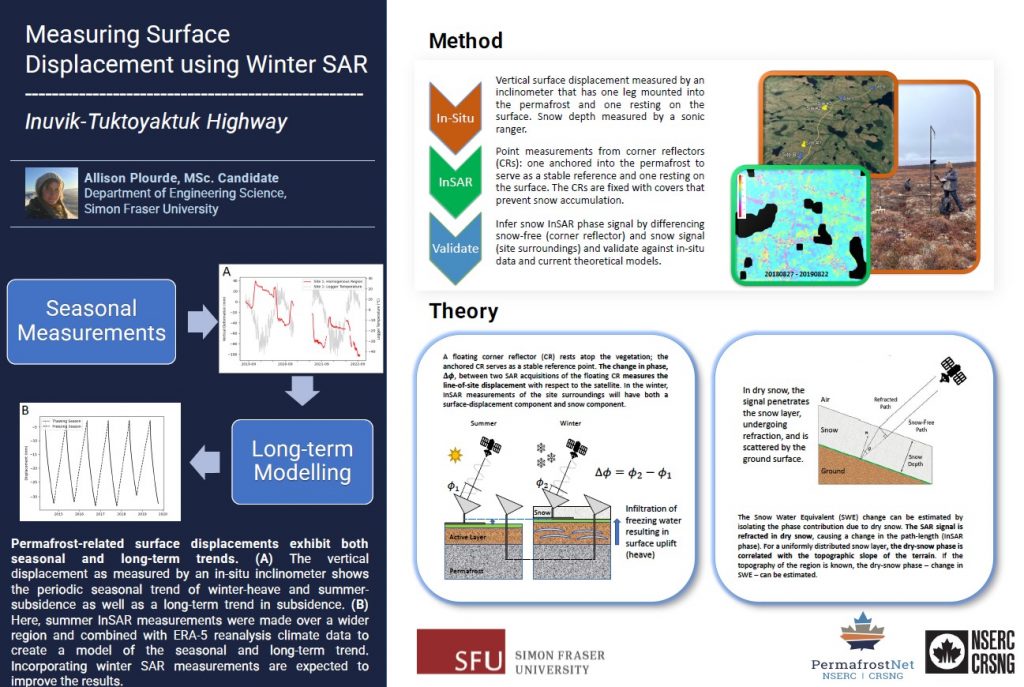
Allison Plourde
Titre: Measuring Surface Displacement Using Winter SAR.
.
Bingqian Zhang
Titre: Constructing 3-D Ground Ice Map Using Deep Learning on Regional Borehole Data.
.
Galina Jonat
Titre: Ensemble simulations of permafrost change by terrain type.
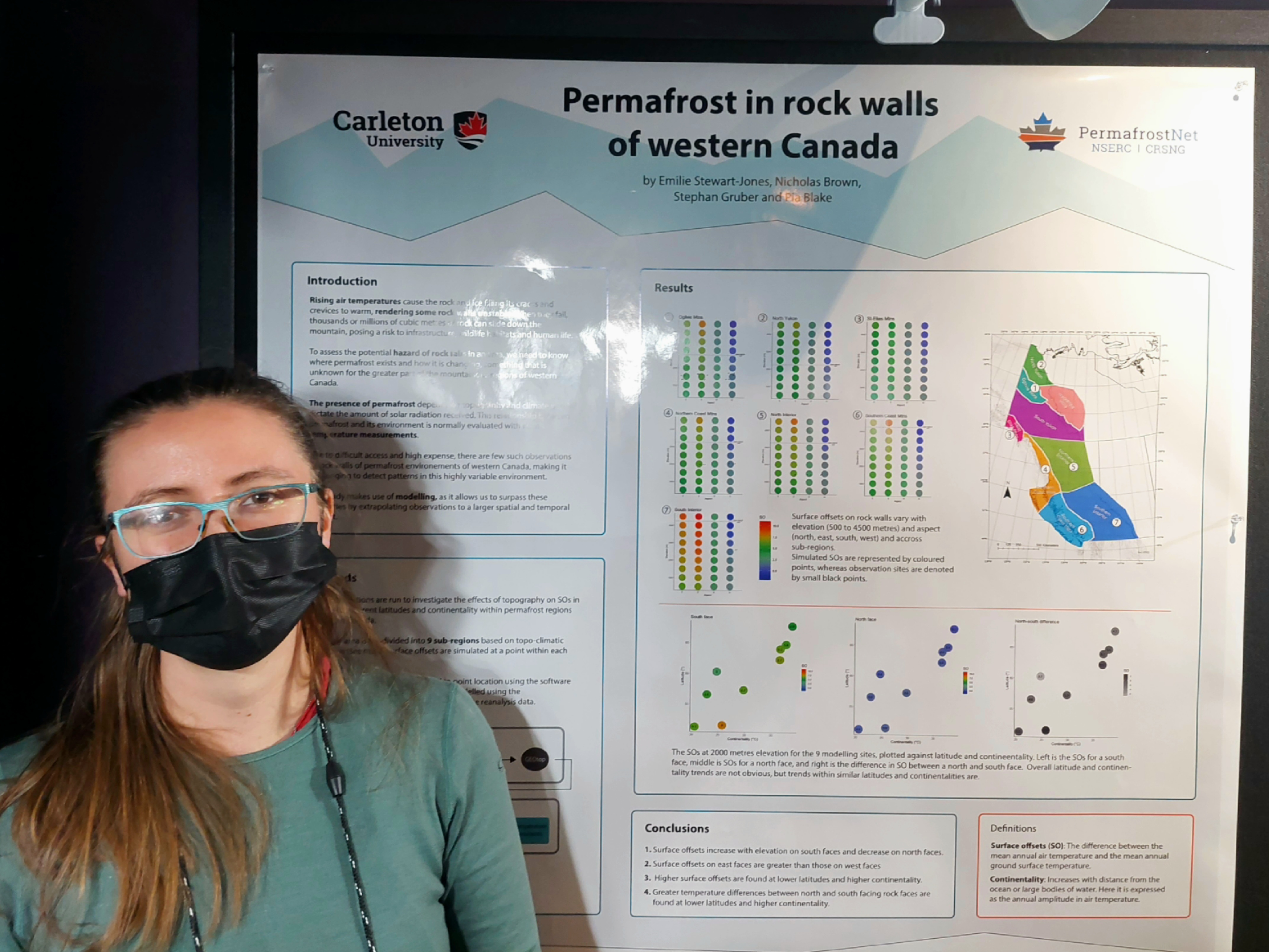
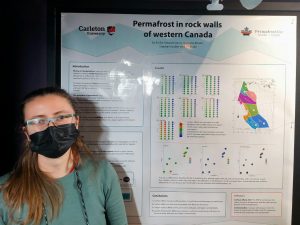
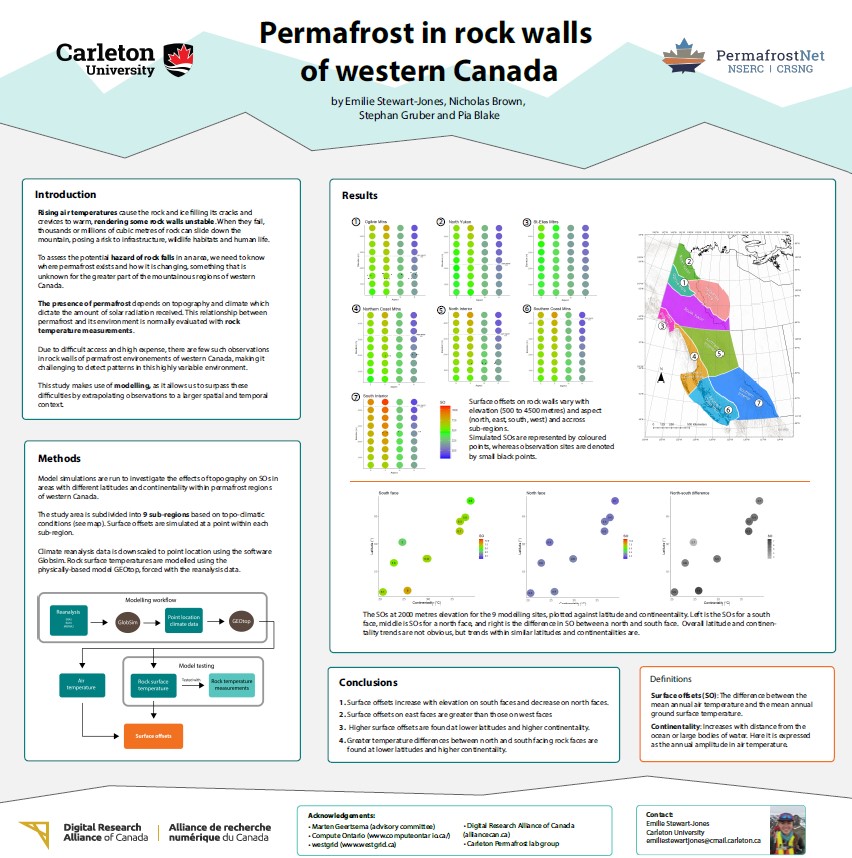
Pia Blake and Emilie Stewart-Jones
Titre: Permafrost in rock walls of Western Canada.
Hannah MacDonell
Titre: Statistical analysis of ground surface temperature simulations in the Northwest Territories tundra.
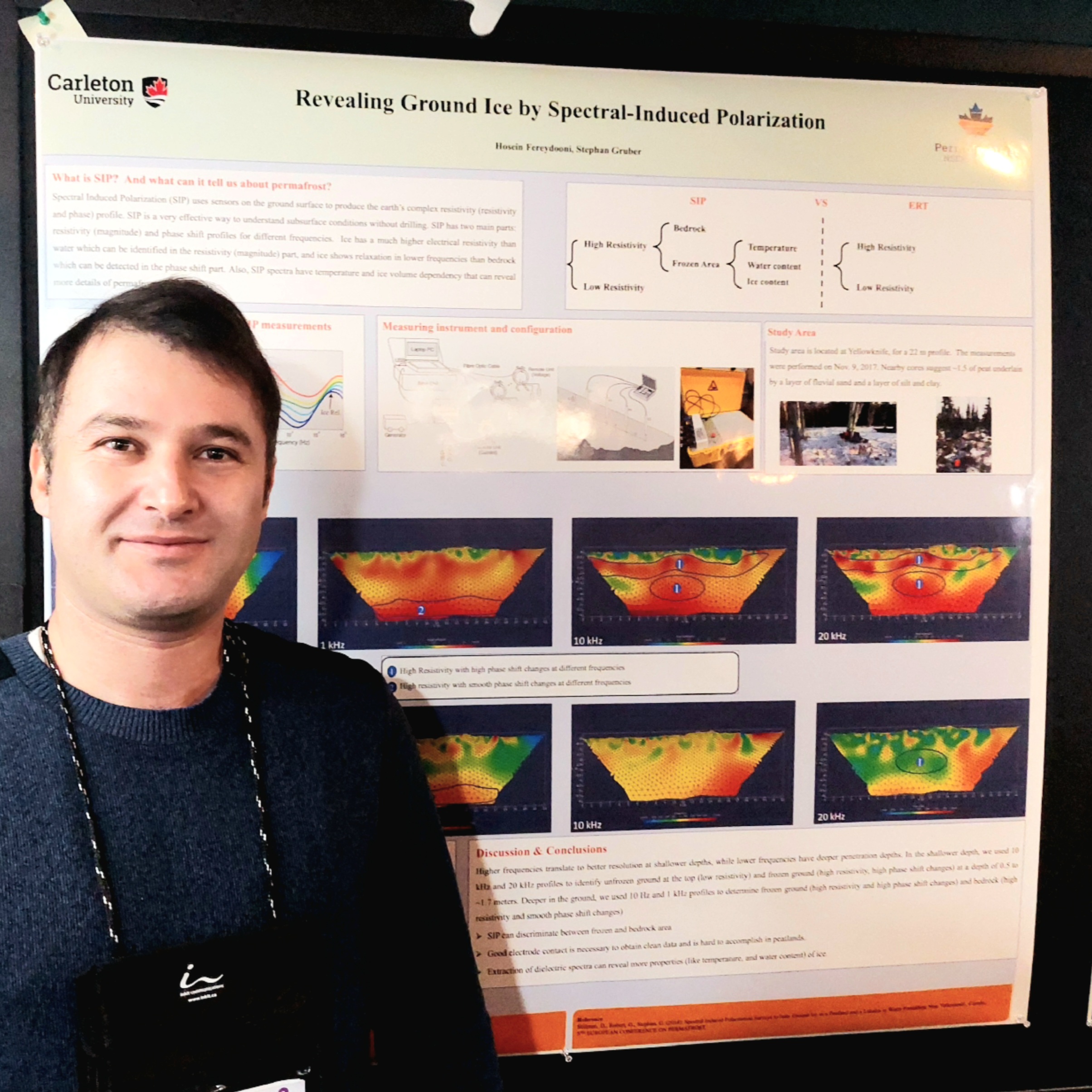
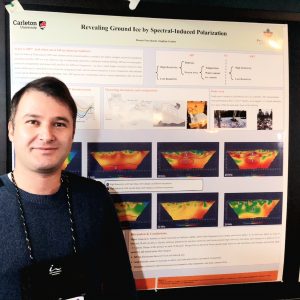
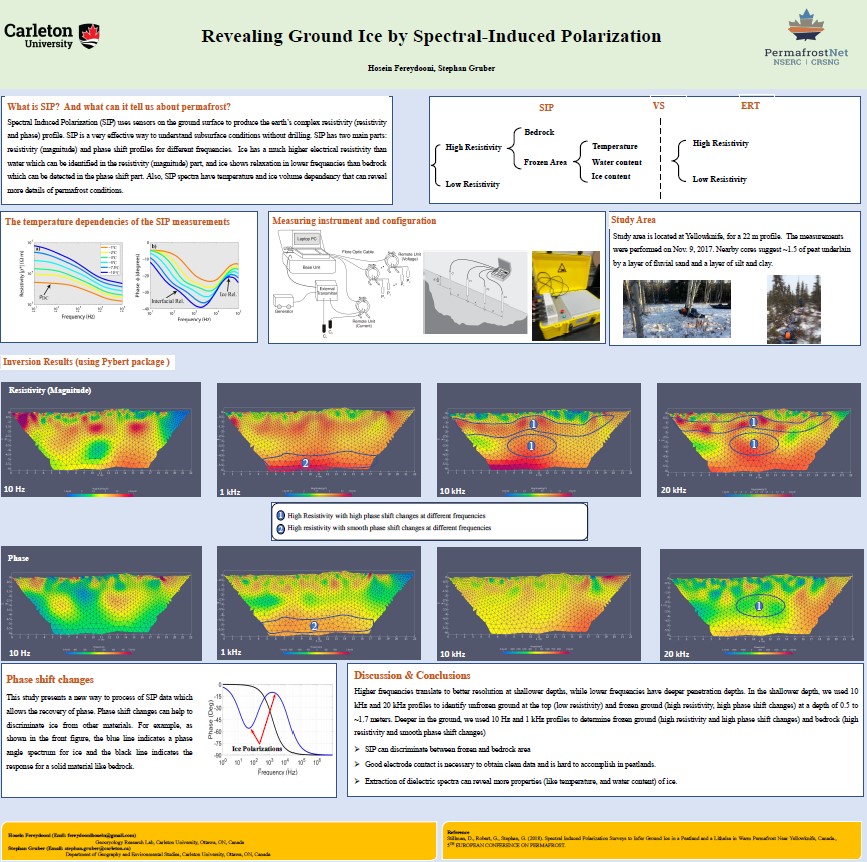
Hosein Fereydooni
Titre: Revealing Ground Ice by Spectral-Induced Polarization.
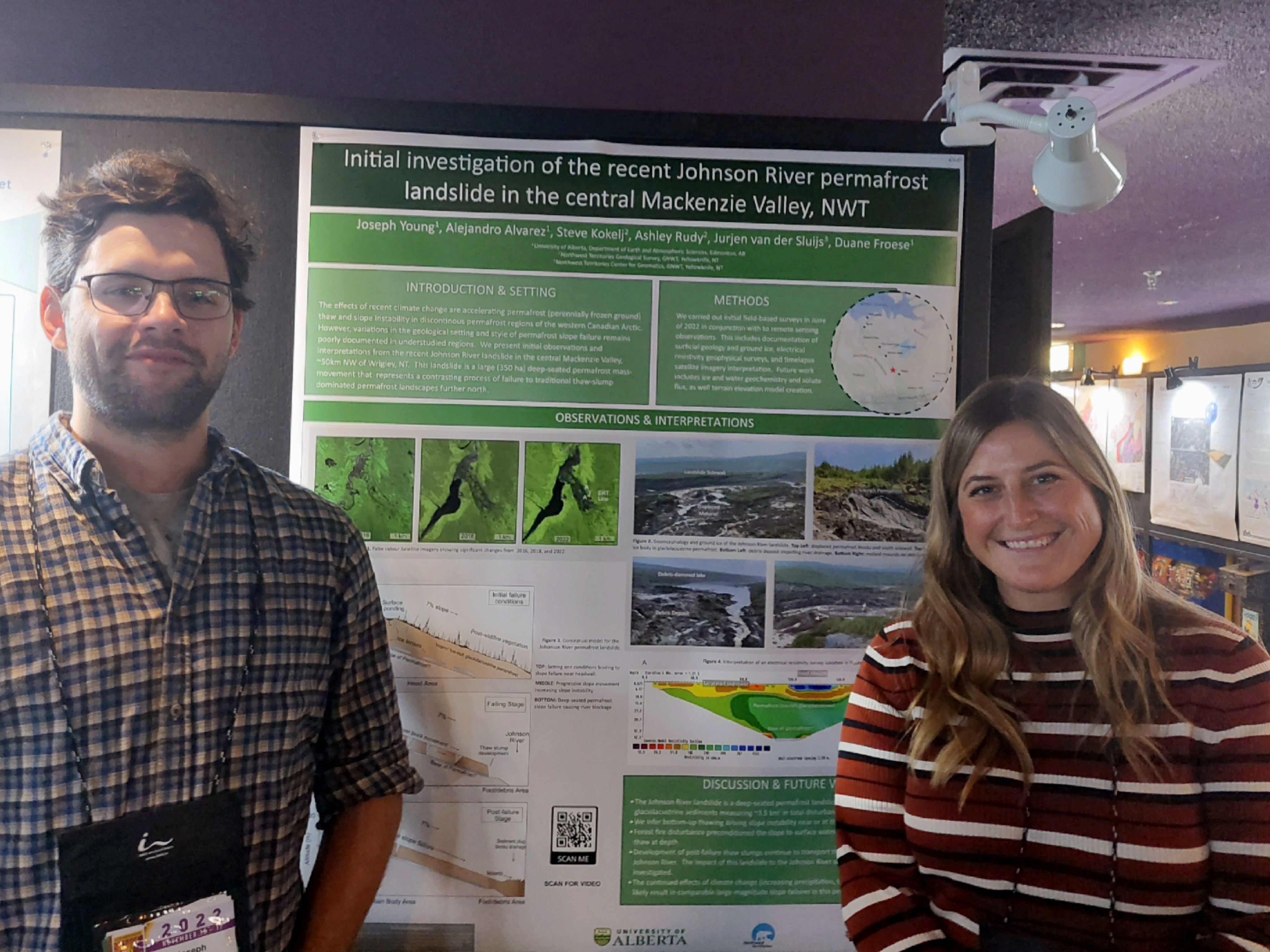
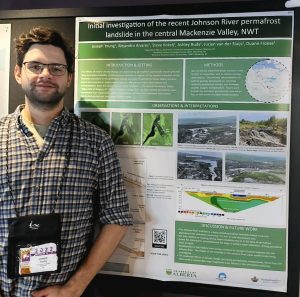
Joseph Young
Titre: Initial investigation of the recent Johnson River permafrost landslide in the central Mackenzie Valley, NWT.
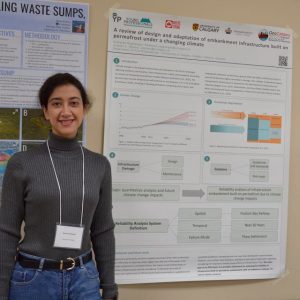
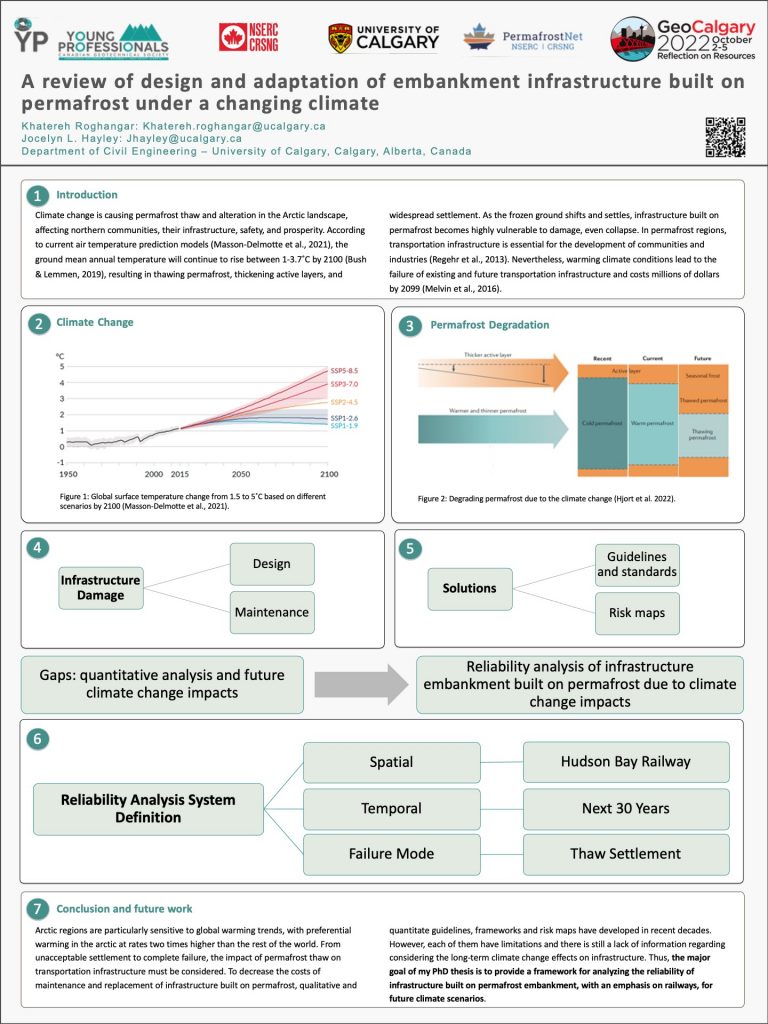
Khatereh Roghangar
Titre: A review of design and adaptation of embankment infrastructure built on permafrost under a changing climate.
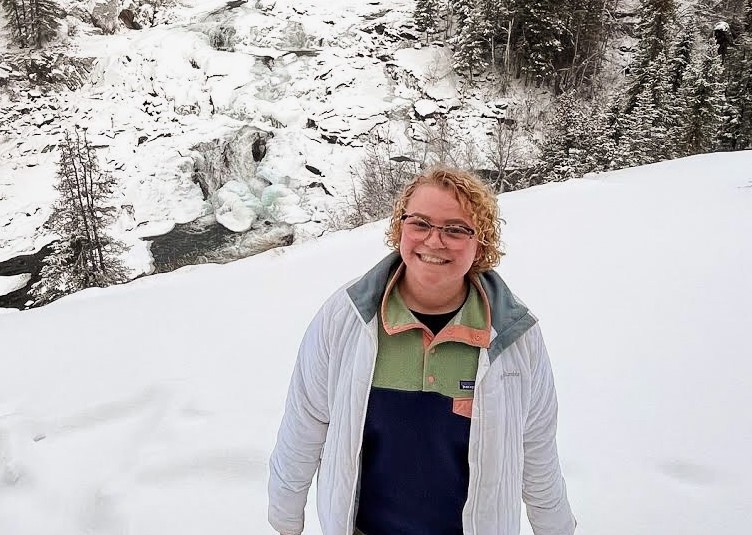
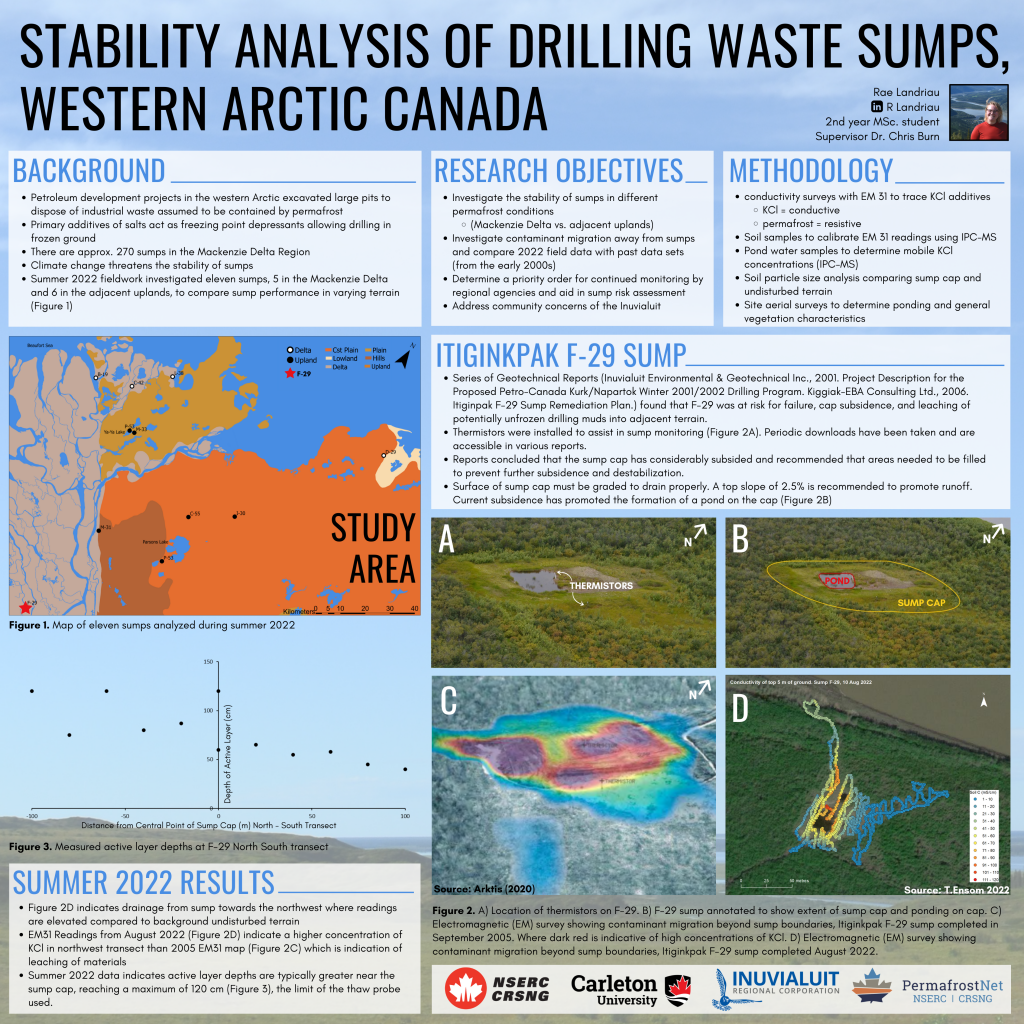
Rae Landriau
Titre: Stability analysis of drilling waste sumps, western Arctic Canada.
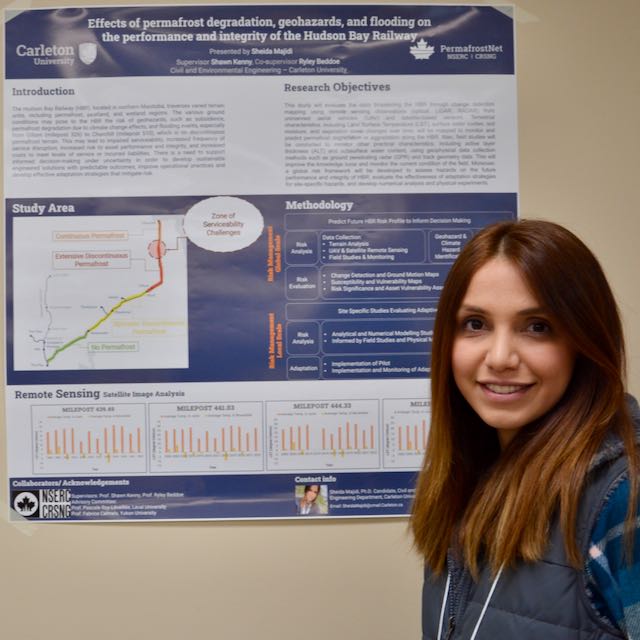
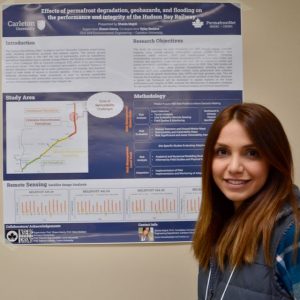
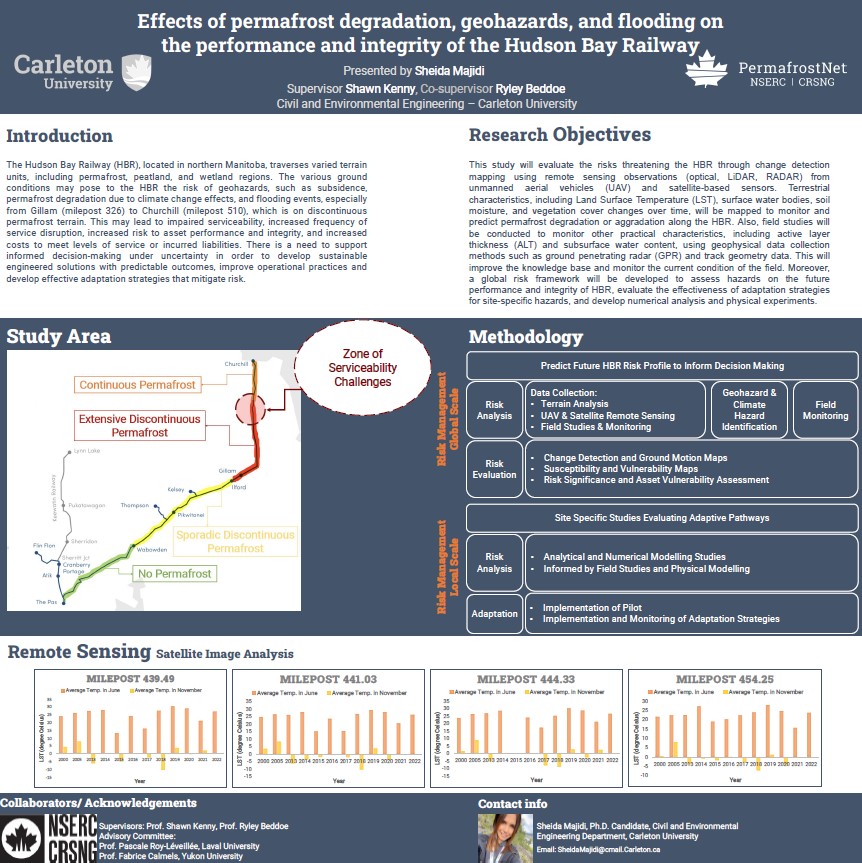
Sheida Majidi
Titre: Effects of permafrost degradation, geohazards and flooding on the performance and integrity of the Hudson Bay railway.
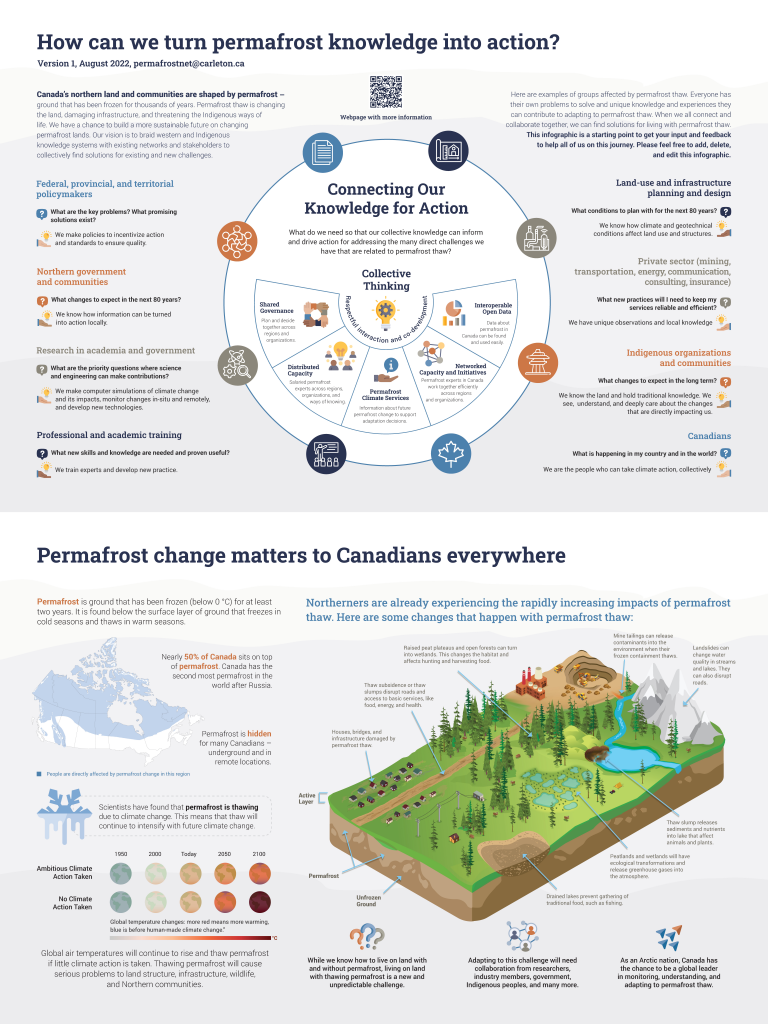
Stephan Gruber
Titre: How can we turn permafrost knowledge into action?
Usman Iqbal
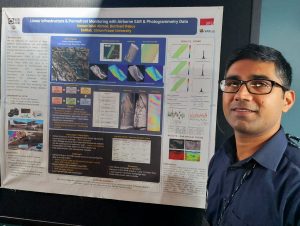
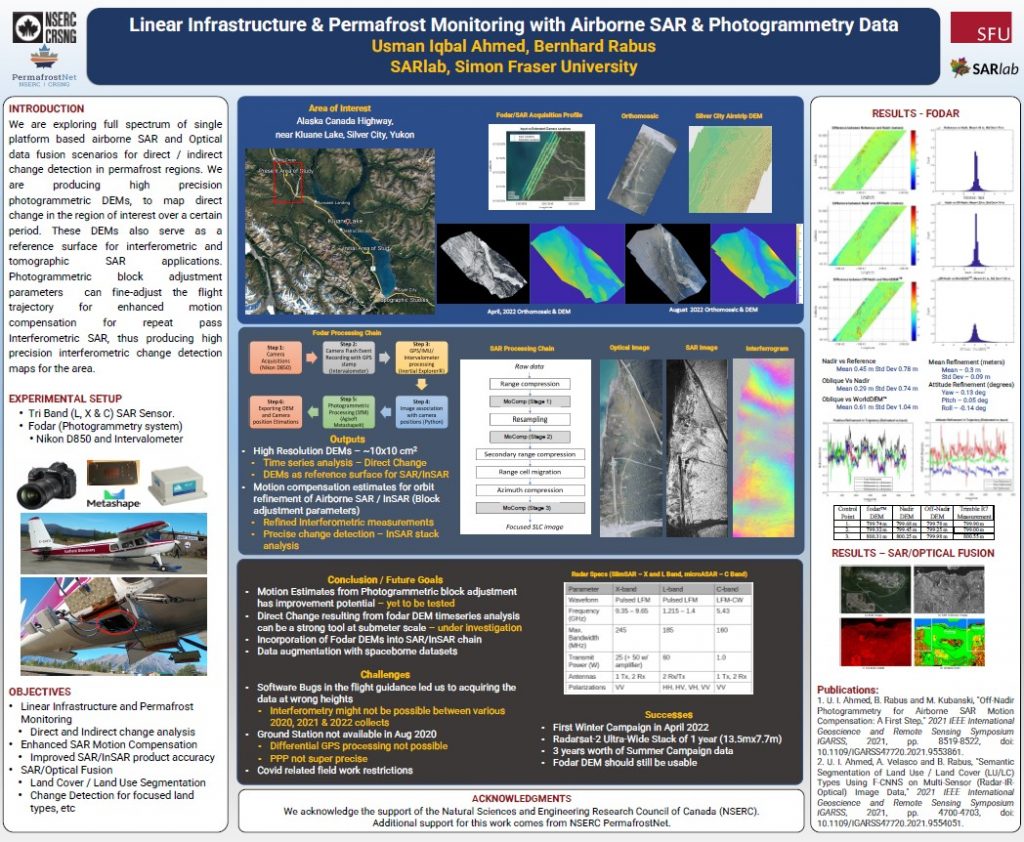
Titre: Linear Infrastructure & Permafrost Monitoring with Airborne SAR & Photogrammetry data.
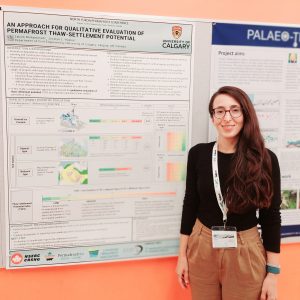
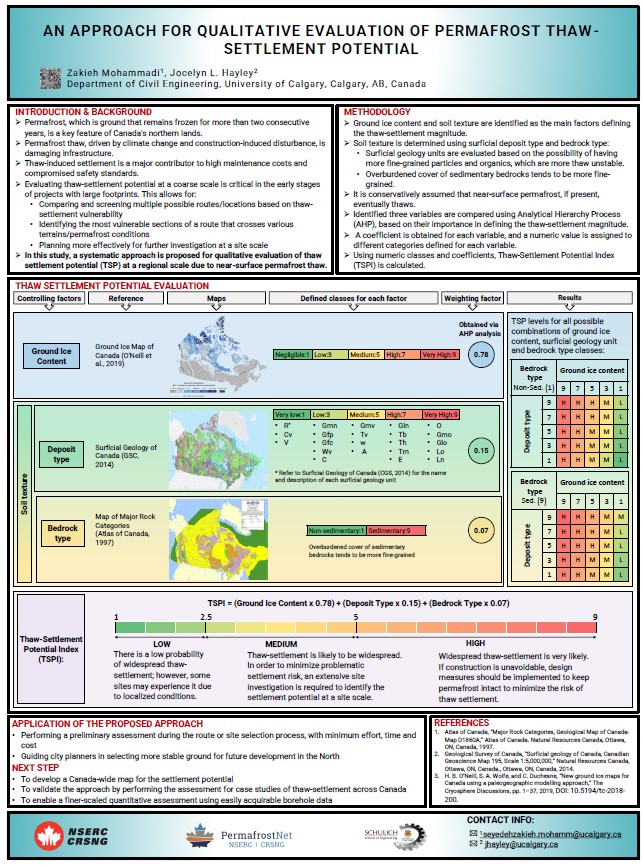
Zakieh Mohammadi
Titre: An approach for qualitative evaluation of permafrost thaw-settlement potential.