Finale event

On the 18th of November 2025, NSERC PermafrostNet concluded its transformative six-year journey with a celebration at Carleton University’s Advanced Research and Innovation in Smart Environments (ARISE) Building in Ottawa, bringing together researchers, community members, partners and supporting organizations.

The finale marked a significant moment in Canadian research with the end of the first strategic national partnership to address thawing permafrost.

The evening began with welcomes and introductions from Elham Gharji, the NSERC CREATE LEAP Program Coordinator, followed by presentations from Janet King (PermafrostNet Board Chair), Rafik Goubran (VP Research & International at Carleton University), and Tristan MacLean (Director of Operations), who shared perspectives on the network’s accomplishments, institutional support, and quantified impact.

PermafrostNet’s strength lay in its collaborative structure, with 16 professors, 45 graduate students and post-doctoral fellows, 40+ partner organizations, and 200+ active network members spanning government, Indigenous communities, and industry.

The evening highlighted extraordinary achievements across multiple dimensions. The network trained over 60 people, many of whom now conduct permafrost research within government, academia, or industry. Scientific outputs include over 70 publications, 100+ conference presentations, and the development of critical data products. This included compiling geotechnical records representing approximately 60,000 measurements, and generating new ground ice estimates from these data using the Canadian Permafrost Index Properties (C-PIP database).  The network’s climate modeling work enhanced the CLASSIC system to incorporate carbon cycling in permafrost-affected soils, implement a feather moss plant functional type, parametize plant hydraulics, and assessed the biogeochemical cycles of soil nutrients following wildfires in permafrost terrain.

In addition to the scientific accomplishments, the finale reception was an opportunity to recognize the capabilities developed, the relationships established, and new initiatives the network has catalysed.

After an intermission featuring networking and refreshments, the evening continued with Ramona Pearson providing an inspiring talk about Scotty Creek Research Station, followed by Olivia Meier-Legault reflecting on the student experience and training legacy, and Stephan Gruber, the Scientific Director, concluding the evening with remarks on the network’s vision and future directions.

As the network concludes, its legacy persists through continued initiatives like CREATE LEAP, PermaRail and through the next generation of permafrost researchers shaped by this collaborative vision. The finale marks not an ending, but a transition. The knowledge, relationships, and capabilities built through NSERC PermafrostNet will continue to serve Canada’s North, inform climate adaptation strategies, and inspire the next generation of permafrost researchers.

By Tristan MacLean, ago
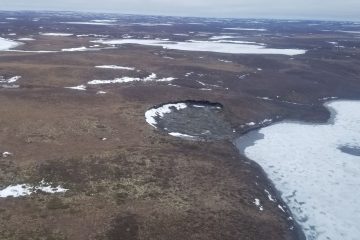
Aerial view of a barren, tundra landscape with patches of snow, several partially frozen lakes, and a large, round depression crater near the shoreline of one lake. The sky is overcast.

Brief communication: Reanalyses underperform in cold regions, raising concerns for climate services and research

Many changes in cold regions are amplified by nonlinear processes involving ice and have important consequences locally and globally.

The climate-driven changes in cold regions have an outsized importance for local resilient communities and for global climate through teleconnections. Bin Cao and Stephan Gruber show that reanalyses are less accurate in cold regions compared to other more populated regions, coincident with the low density of observations. Our findings likely point to similar gaps in our knowledge and capabilities of climate research and services in cold regions.

 
The 1991–2020 average ensemble spread of (a) mean annual air temperature (MAAT) and (b) relative maximum snow water equivalent (maxSWE) among different reanalyses. 

The ensemble spread in the mean annual maximum snow water equivalent is found to be greater than the ensemble mean. The reduced quality of reanalyses in cold regions, coinciding with sparse in situ observations and low population, points to challenges in how we represent cold-region phenomena in simulation systems and limits our ability to support climate research and services.

The 1991–2020 average ensemble spread of mean annual air temperature (MAATs) and relative spread of maximum snow water equivalent (maxSWEs).

Cao, B. and Gruber, S.: Brief communication: Reanalyses underperform in cold regions, raising concerns for climate services and research, The Cryosphere, 19, 4525–4532, https://doi.org/10.5194/tc-19-4525-2025, 2025.

By Tristan MacLean, ago

GeoManitoba 2025

78th Annual CGS Conference & 9th Canadian Permafrost Conference
September 21 – 24, 2025 

This Fall NSERC PermafrostNet attended GeoManitoba2025 at the RBC Convention Centre in Winnipeg, with an exhibitor booth, presentations and the launch of the Network Research Summaries.

The conference started on Monday with Canadian Permafrost Association case studies featuring a “Preliminary Assessment of the Flood Risk Potential Along the Hudson Bay Railway with Consideration of Climate Change Effects” by Adeleh Zafranchi Zadeh Moqadam, followed in the afternoon by Scientific Director, Stephan Gruber, talking about “Permafrost simulations can more effectively support adaptation decisions when they are contextualized, localized, reliable, and informed by uncertainty analyses“.

The afternoon also featured the culmination of the network’s Theme 5 with a panel session “Experiences in adapting to permafrost change.” featuring former network student Astrid Schetselaar.

The conference saw the launch of the Glossary of Permafrost Science and Engineering at a special lunch on Tuesday the 23rd of September.

The Tuesday afternoon highlights were the talks in the Geomorphology section by network members, Tabatha Rahman on “Late Holocene ice-wedge development in the Barrens of northern Manitoba“, and Zhina Rezvani’s research into the “Effect of the peat layer on the ground thermal regime along the Hudson Bay Railway“.

By Tristan MacLean, ago

Glossary of Permafrost Science and Engineering

The new Glossary of Permafrost Science and Engineering has been launched.

With accelerated climatic warming and announcements of important investments in northern infrastructure, the need for a comprehensive and up-to-date glossary of permafrost was more pressing than ever.

The new Glossary is the culmination of multiple years of consensus-based work by a Canadian-led team of multidisciplinary experts in permafrost science and engineering.

This exhaustive reference work (355 entries) will facilitate effective communication between the communities of experts and practitioners of the permafrost world.

You can download an electronic, hyperlinked version on the website of the Canadian Permafrost Association for free – Glossary of Permafrost Science and Engineering.

The project was led by Antoni Lewkowicz and co-authors included Brendan O’Neill, Steve Wolfe, Pascale Roy-Leveillee, Vladislav Roujanski, Ed hove, Stephan Gruber, Heather Brooks, Ashley Rudy, Cassandra Koenig, Nicholas Brown, and Philip Bonaventure, but many other contributed to reviewing the entries, providing equivalent French terms, or giving expert advice.

By Tristan MacLean, ago

Parameter optimization for global soil carbon simulations: Not a simple problem

Soils store large amounts of organic carbon that could be released into the atmosphere due to climate change, but future projections from numerical models of soil organic carbon dynamics remain highly uncertain. 

A recent study by Charles Gauthier used Bayesian optimization techniques and global sensitivity analysis to better constrain the Canadian Land Surface Scheme Including Biogeochemical Cycles (CLASSIC) model’s soil organic carbon parameters.

Getting a handle on how soil stores and releases carbon is critical for modeling climate change, yet global simulations face many challenges due to uncertain parameters and sparse data. The team explored different sets of parameters and tested two types of loss functions, finding that this choice can greatly influence model outcomes.

Schematic representation of the optimization workflow.
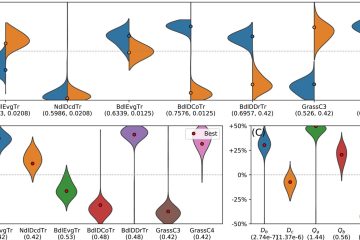
The best parameter set resulted in a 12% improvement when compared to observations and matched well with global estimates of soil carbon stocks, particularly at high latitudes. However, the study also points out that certain regions—like the vast needle-leaf forests of Siberia—remain poorly observed and contribute to ongoing uncertainty. By flagging these gaps, the research not only offers a more accurate model but also calls for more targeted data collection and optimization approaches going forward, aiming to close the loop on carbon-climate feedbacks for better future predictions.

Top meter soil organic carbon (SOC) content across the Northern Circumpolar Soil Carbon Database domain obtain with the default parameterization (SDEF) and the two optimized parameter sets (S2EO and SPMO). SOC content is averaged over the 1950–2000 period.

Gauthier, C. B.,  Melton, J. R.,  Meyer, G.,  Raj Deepak, S. N., &  Sonnentag, O. (2025).  Parameter optimization for global soil carbon simulations: Not a simple problem. Journal of Advances in Modeling Earth Systems,  17, e2024MS004577. https://doi.org/10.1029/2024MS004577

By Tristan MacLean, ago

Beyond MAGT: learning more from permafrost thermal monitoring data with additional metrics.

Ground temperature is the most common variable in permafrost monitoring and one of three products used to characterize the permafrost Essential Climate Variable by the World Meteorological Organization.

PermafrostNet’s data scientist, Nicholas Brown, has conducted an investigation into the metrics used to assess indicators of permafrost and heat changes in the ground.

Based on this investigation, recommendations are provided for a set of five metrics that offer a more comprehensive picture of permafrost thaw.

Metrics such as the mean annual ground temperature (MAGT) and active layer thickness (ALT) are used to monitor and quantify permafrost change. However, these have limitations including those arising from the effects of latent heat, which reduce their sensitivity.

The team investigated the behaviour of existing and novel metrics derived from temperature observations (TSP metrics) using an ensemble of more than seventy 120-year simulations. They evaluated which TSP metrics provide new insight into permafrost change and evaluated how reliably each one indicates changes in sensible, latent, and total heat contents for different levels of sensor quality. They also quantified the effect of sensor placement on the magnitude of observed MAGT trends.

Brown, N. and Gruber, S. (2025). Beyond MAGT: learning more from permafrost thermal monitoring data with additional metrics, EGUSphere [preprint], DOI: https://doi.org/10.5194/egusphere-2025-2658

By Tristan MacLean, ago

Modelling the temporal dynamics of subarctic surface temperature inversions from atmospheric reanalysis for producing point-scale multi-decade meteorological time series in mountains

The vertical profile of air temperatures in subarctic regions is difficult to quantify, especially in areas with mountainous terrain subject to strong and lasting inversion events. 

Relying on observational data is not possible in most places due to sparse weather stations.

A recent study by Victor Pozsgay tackles the challenge of developing a model that leverages atmospheric reanalysis data and calibrates it using data from five weather stations in the Yukon, Canada.

Map of the study area showing the five sites around Dawson City, Yukon Territory, Canada. The basemap is composed of the Esri World Terrain Base and Esri World Hillshade layers, and is projected in the WGS 1984 Web Mercator projection.

Accurately tracking air temperatures in subarctic mountainous regions is a challenging task, especially due to the prevalence of strong and frequent temperature inversions. These inversions play a critical role in shaping permafrost distribution and regional climate dynamics, yet traditional observations are sparse because of the lack of weather stations in rugged terrain. Victor’s study tackles this challenge by developing a model that leverages atmospheric reanalysis data and calibrates it using actual data from the Yukon. The calibrated model successfully reflects the trends in inversion frequency, strength, and depth that have been evolving since 1948, departing from typical warming patterns seen elsewhere. This approach makes it possible to produce reliable, point-scale meteorological time series for even the most inaccessible locations—an essential advance for studies of permafrost and the broader climate system. The model’s reliance on global reanalysis data and minimal location-specific calibration means it is poised to be both future-proof and widely applicable for regional climate applications, offering a much-needed solution for addressing data gaps in complex, mountainous terrains.

Mean daily pressure-level temperatures for several altitudes at and above the Dawson Airport (ERA5 data on 1 February 2007). The dependence with altitude is linear above 2300 m, where the linear lapse rate can be fitted. Below this, a ‘‘lapse’’ temperature is extrapolated at the grid and station levels. In the grey band, the altitudinal temperature behaviour is inverted, increasing with elevation. The elevation of the five stations used is reported on the right-hand side. The reanalysis data appear in blue, with points representing the pressure level air temperature Tpl and a triangle at the grid level for the surface temperature Tsur. Finally, the observed temperature Tobs is a green diamond at the station’s elevation.

Victor Pozsgay and Stephan Gruber. 2025. Modelling the temporal dynamics of subarctic surface temperature inversions from atmospheric reanalysis for producing point-scale multi-decade meteorological time series in mountains. Arctic Science11: 1-16. https://doi.org/10.1139/as-2025-0027

By Tristan MacLean, ago

Seminar – POSTPONED – Tundra Firescape: Vegetation Succession and Perceptions.

POSTPONED – Due to unforeseen circumstances today’s seminar has been postponed.

We will let you know as soon as we have a new date for the seminar.

Thank you for your understanding.

Léa Cornette will be presenting Tundra Firescape : Vegetation Succession and Perceptions.

Please note that the seminar will be presented in French, with slides provided in English.

Veuillez noter que le séminaire sera présenté en français, avec des diapositives en anglais.

Date: POSTPONED
Time: 13:00-14:00 Eastern Time
Location: Zoom (details are posted in our Teams site).

Increased wildfire activity regimes in the Arctic tundra is a growing concern owing to their ecological and human impacts. This study explores the long-term effects of wildfires on soil physical properties, nutrients availability and vegetation succession, using a fire scar chronosequence (EV034-68, EV014-12, EV014-23) in the Inuvialuit Settlement Region (ISR) around Inuvik. Using a mixed approach, this study also aims to understand the perceptions of community members from the ISR of how wildfires, but also weather and climate variations, modify the landscape and their relationship with it.

By Tristan MacLean, ago
A diagram of primary water, energy, CO₂, and CH₄ fluxes in the CLASSIC model, showing interactions among leaves, stem, root, snow, litter, and soil carbon, with labeled arrows for each flux and process.

Seminar – 16 July – Characterizing carbon and water fluxes in the arctic boreal forest using plant hydraulics parameterization in the presence and absence of permafrost.

Muhammad Umair will be presenting Characterizing carbon and water fluxes in the arctic boreal forest using plant hydraulics parameterization in the presence and absence of permafrost: a modelling approach.

Date: 16 July 2025
Time: 13:00-14:00 Eastern Time
Location: Zoom (details are posted in our Teams site).

Stomatal conductance in terrestrial biosphere models (TBMs) plays a critical role in accurately simulating carbon and water fluxes, and for evaluating the impacts of climate change on land surface-atmosphere interactions. Climate change impacts such as more frequent heat waves and drought conditions challenge TBMs and need to be investigated thoroughly, especially in the rapidly changing arctic boreal forest. Terrestrial biosphere models such as the Canadian Land Surface Scheme Including Biogeochemical Cycles (CLASSIC) often employ empirical formulations that link soil moisture to stomatal conductance. These soil moisture-based empirical approaches typically perform poorly under drought conditions.

Our study implemented an explicit plant hydraulics parameterization in CLASSIC to connect the soil-plant-atmosphere continuum through plant hydraulic traits, i.e., stomatal optimization based on xylem hydraulics (SOX), resulting in CLASSICSOX. Model performance was evaluated at eight arctic boreal forest sites; three are permafrost-free, four are in the discontinuous permafrost zone, and one is in the continuous permafrost zone. Compared to the default CLASSIC, simulated gross primary production (GPP) improved at all eight sites with CLASSICSOX. Drought conditions at the eight sites were identified using the Palmer Drought Severity Index, and the results showed improvement in simulated GPP during drought conditions. Overall, the SOX parameterization achieved improved results compared to CLASSIC by-default at all sites, specifically for the sites located at the continuous and discontinuous permafrost zone.

By Tristan MacLean, ago
A small culvert runs under a gravel embankment beside a pond, with a sparse evergreen tree and shrubs in the foreground beneath a blue sky.

Seminar -2 July – Flood Susceptibility Assessment of the Hudson Bay Railway.

Adeleh Moqadam will be presenting Flood Susceptibility Assessment of the Hudson Bay Railway.

Date: 2 July 2025
Time: 13:00-14:00 Eastern Time
Location: Zoom (details are posted in our Teams site).

The Hudson Bay Railway (HBR) is a critical transportation link in northern Manitoba, providing access to the Port of Churchill. Its location across a permafrost region and extensive wetlands poses ongoing drainage challenges, especially under changing climate conditions. Washouts along the railway over the past decade, caused by excessive water flow, have highlighted its vulnerability to flooding events.

In this seminar, Adeleh will present two studies that preliminarily assess flood risk potential along the HBR using GIS analysis and hydrological modeling. The first study involves developing a flood susceptibility map to identify segments of the track that are more prone to flooding. The second study quantifies potential increases in runoff due to climate change at a railway bridge in the Weir River basin, which was previously identified as a highly flood-prone area. This is done by developing a semi-distributed hydrological model using the Raven Hydrological Modelling Framework. After calibrating the model under current climate conditions, it was forced with climate change projections to simulate future peak flows. Findings from these studies aim to support decision-makers in improving the HBR drainage system and enhancing its long-term resilience to climate change.

By Tristan MacLean, ago